Better data.
Better talent results.
No other part of your business runs on year-old survey data, so why does your compensation team? Companies that are serious about attracting and retaining elite talent use Market Data Pro from Pave to make winning compensation decisions in real time.
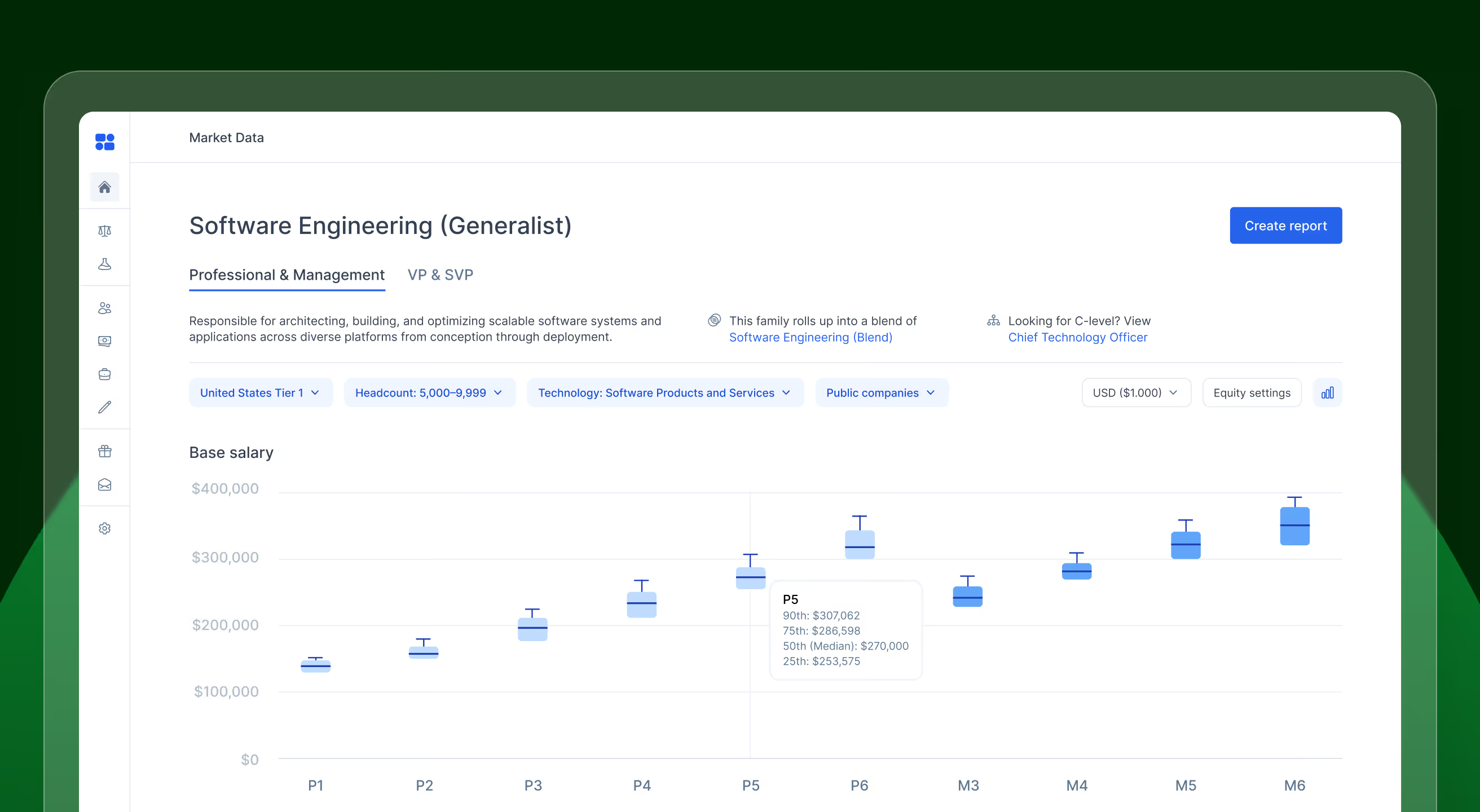
Data that matters,
at the speed of now

8,700+ participating companies
Legacy surveys take an annual snapshot of pay that gets stale the instant it is created. Pave changes the game so companies can make compensation decisions in real time.

76% market share of the Forbes AI 50
These AI-native companies are changing the world and attracting top talent across every domain. When they need compensation data they can trust, they turn to Pave.

80% market share of the Paraform Talent 50
The companies on this list are where top talent wants to work today, and they use Pave to ensure every job offer lands as intended to close candidates fast.
The half-life of compensation data is weeks, not years
Annual compensation surveys were designed for a stable labor market. Today's competition for talent is anything but that.
When top AI researchers, ML engineers, and SWEs are moving between frontier labs, hyperscalers, and well-funded startups every quarter, compensation data from last year isn't benchmarking — it's a history lesson.
Pave is the real-time compensation infrastructure built for this moment. We're not a better, faster survey. We're a much-needed replacement. If you're serious about competing for top talent, join the 8,700-plus companies already making smarter pay decisions with Pave.
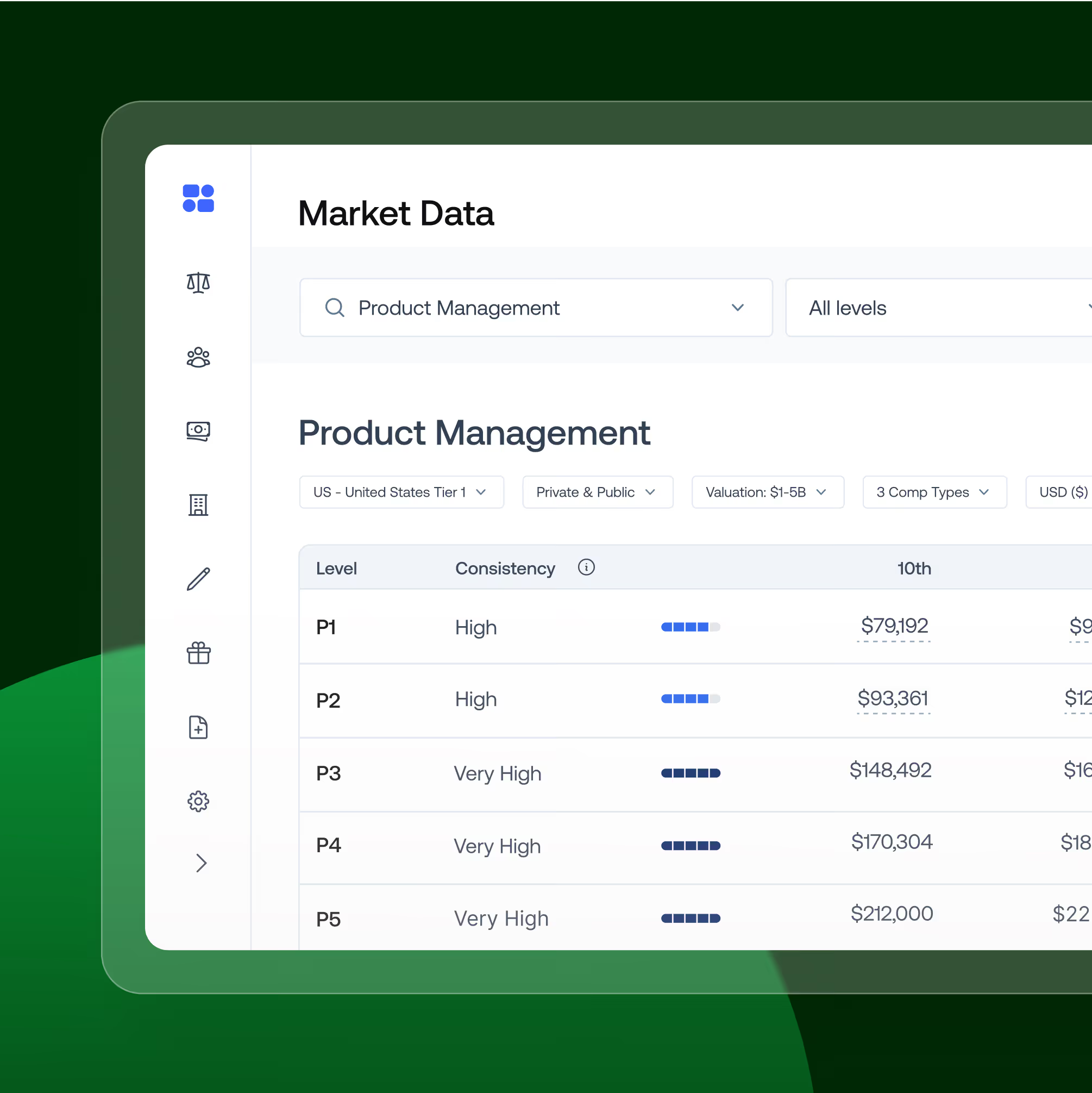
Benchmark pay against the exact companies chasing your people
High-level market data won't tell you what an AI-native startup with a fresh infusion of $1 billion in capital is paying their top technical talent. And it won't tell you why you lost three SWEs and an ML engineer to the same competitor last quarter.
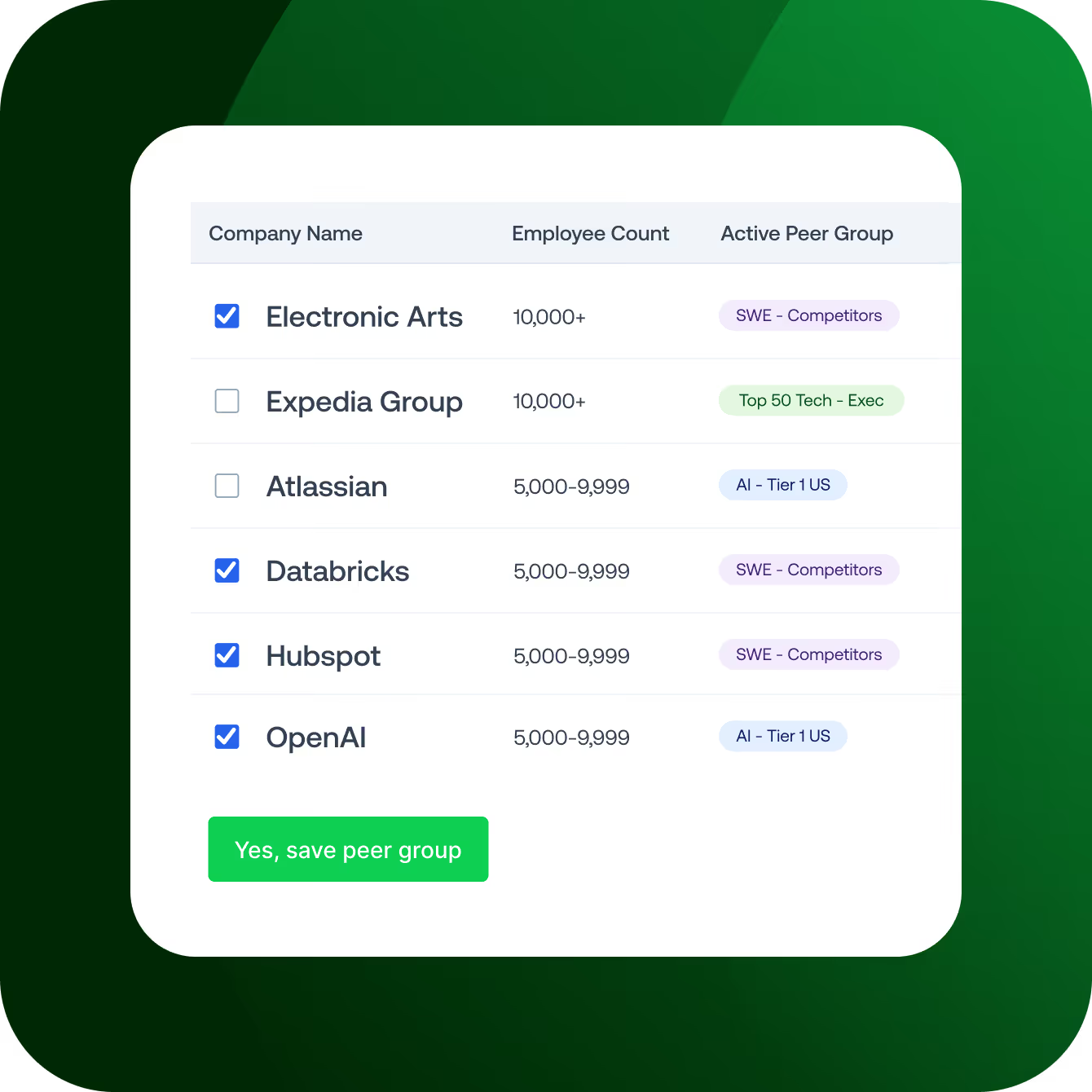
Generic benchmarks produce generic business results. That's not sufficient anymore. Pave lets you define precise peer groups that reflect your actual competition — by industry, headcount, level of investment, geography, or any combination of the above.
Most of the companies you're competing against for critical talent are already in the Pave ecosystem, and now you can understand how they approach pay.
Better benchmarks start with seeing everything
Compensation surveys fail because they're incomplete by design. An annual survey captures what companies choose to submit — summarized figures, approximate role mappings, data that's already months old.
The outlier offer made to land a critical software engineer doesn't make it in. Neither does the equity refresh that changed the retention equation at a frontier AI lab last quarter. Those details get skipped, and because they're missing, the benchmark you're using is wrong.
Pave is infrastructure, not a survey. We connect directly with HCM and equity management systems at 8,700-plus companies. Every offer, every promotion, every equity grant, every compensation adjustment flows in automatically.
This is the reason Pave is more accurate. When you see every data point, instead of the select ones companies choose to surface, the picture of the market is fundamentally different.
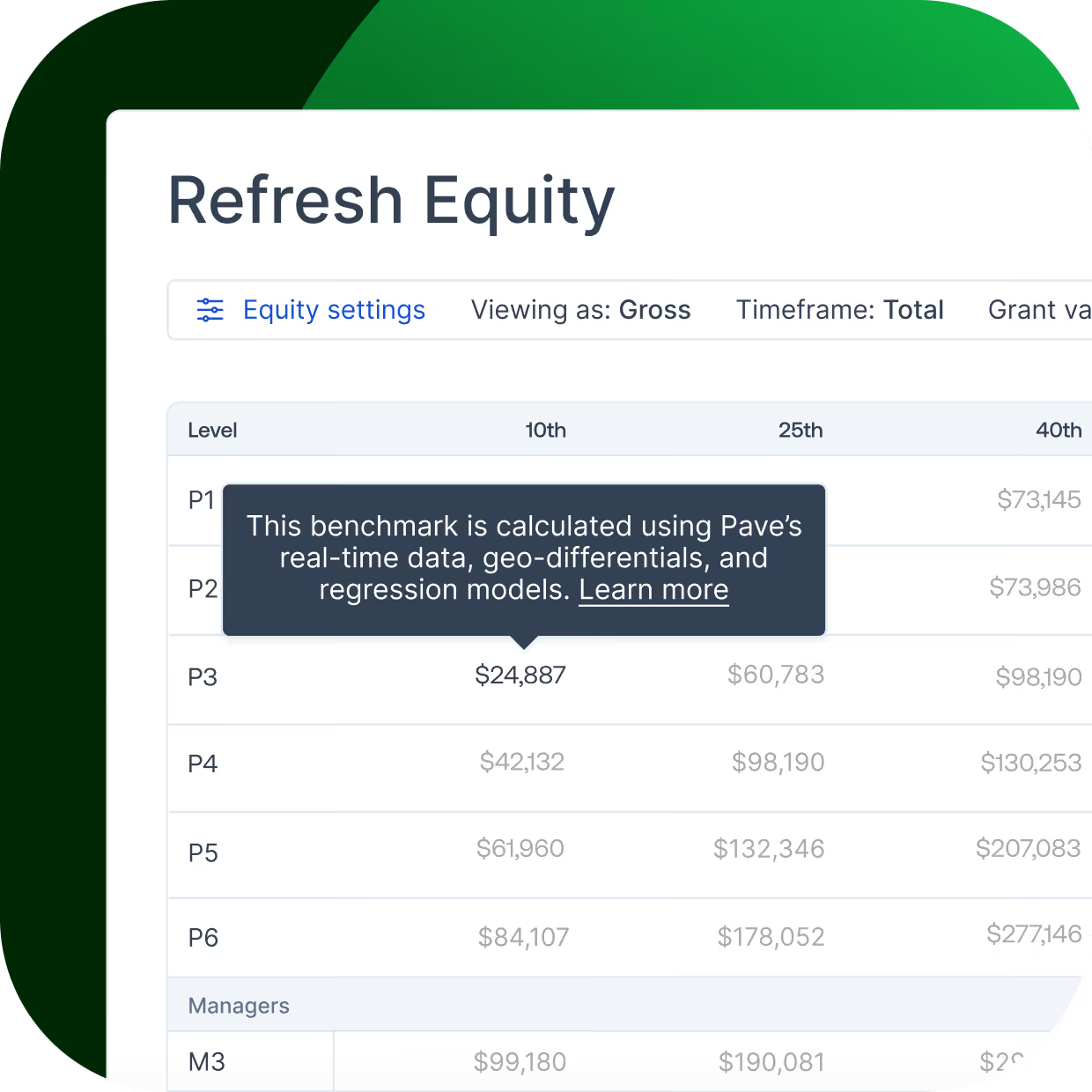
Access equity insights no survey can ever match
Elite candidates with multiple job offers, whether they work in sales or R&D, aren't solely focused on base pay. They're comparing new-hire awards against their unvested equity holdings, and evaluating the impact of cliff timing and refresh cadence on their long-term earnings potential.
Pave connects directly with equity management systems to capture what surveys structurally can't: every unique grant. This unleashes new benchmarks to power your equity strategy, including new-hire grants, ongoing grants, equity holdings, burn rates, vesting practices, and more.
When a frontier AI lab restructures its equity program to shake up the market, you'll see what this means in Pave immediately, not a year from now.
We're here to power your pay decisions, not nickle and dime you
Most survey providers charge you by the data point. Job modules, countries, peer group reporting, and extra features all come with additional price tags.
And before you know it, you're paying $100,000 or more in fees for stale benchmarks from last year. No one should ever have to make a business case like this to their CFO again.
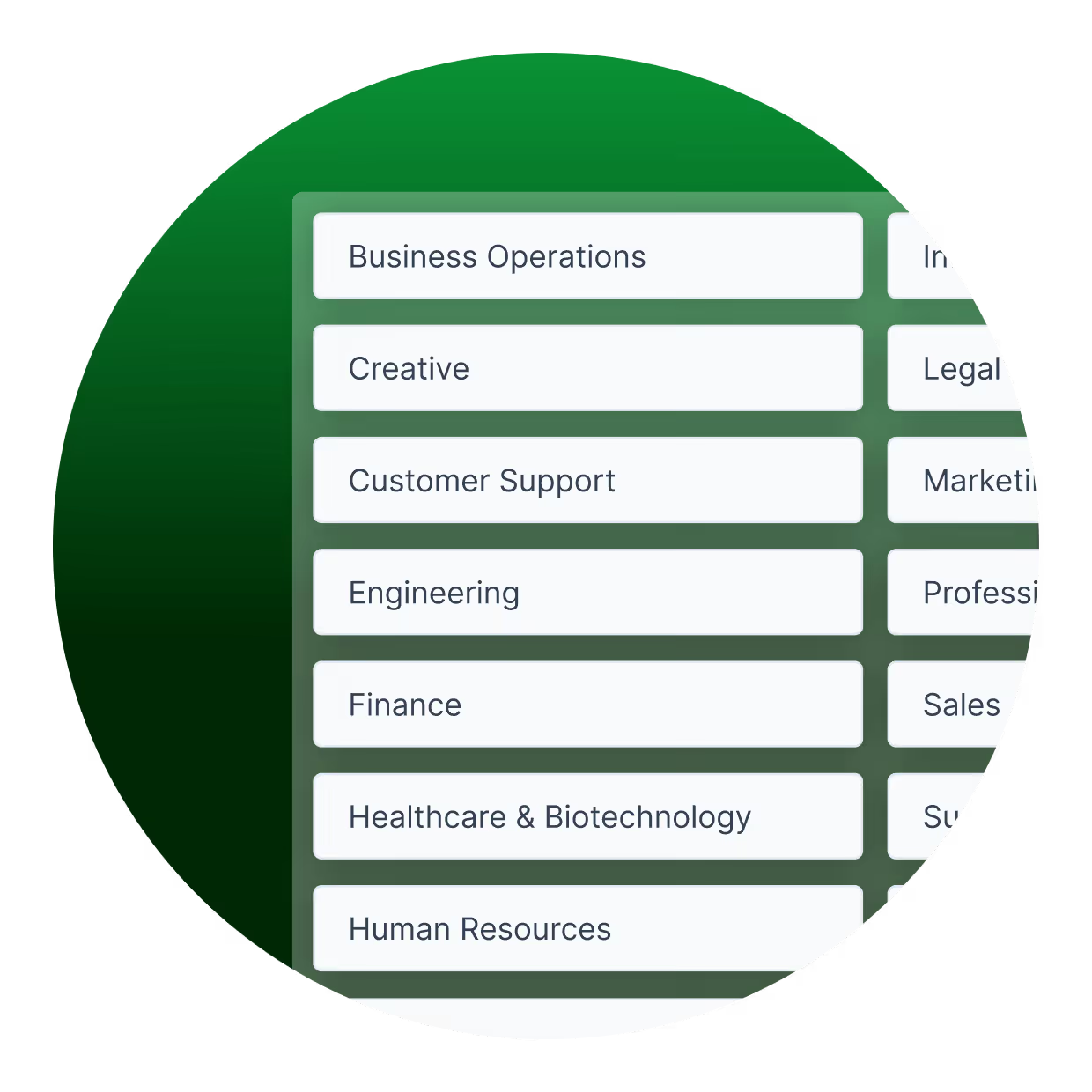
Pave doesn't work this way. One simple price covers everything Market Data Pro has to offer — 250+ job families, 150+ countries and metros, multiple pay types, peer group reporting, and all other features.
The next move is yours
Whether you're a startup in a garage or a global enterprise with 75,000 people, Pave has the data and tools you need to drive business results.

Market Data Lite
Trial Pave data in the overall U.S. and one additional market of your choice. Getting started is easy; just integrate and go.
Market Data Pro
Access real-time compensation data in every market, plus powerful features like peer group reporting for one simple price.
Tools + Agents
Get real-time data plus tools and agents to run every compensation workflow on your to-do list in one cohesive platform.
Important information to know
Industry-leading security. Stringent privacy protections. Numerous integration options. Transparent methodologies. That's Pave.
Frequently asked questions
Pave plugs directly into HCM and equity management systems via secure, persistent AuthO and API connections. When a company joins the Pave ecosystem, their data flows in automatically, including every role, every location, every pay decision, every equity grant, and every new hire. Nothing is submitted manually. Nothing is self-reported. Data updates continuously, which is why Pave benchmarks reflect the true market today, not the market as it existed when someone last filled out a survey submission spreadsheet.
Pave's client community includes 8,700-plus companies in multiple industries spanning high-growth startups to global enterprises. Critically, Pave's dataset covers 74% of the Forbes AI 50 — the companies currently setting the compensation market for the entire AI and ML labor pool — along with 80% of the Paraform Talent Density Index. This concentration of data from the most talent-competitive companies is what makes Pave benchmarks meaningfully different: you're not benchmarking against a broad average. You're benchmarking against the companies most employees want to work for.
Market Data Pro from Pave allows clients to benchmark all common pay types, including base salary, target bonus expressed as a percentage of base salary, target bonus expressed as a value, bonus eligibility, target total cash compensation, pay mix for commission-based roles, new-hire equity awards, ongoing (or refresh) equity awards, total equity holdings, and unvested equity holdings. Additional features in Market Data Pro include burn-rate and vesting-practice benchmarks, plus a customizable geo-differential calculator.
Market Data Pro from Pave allows clients to benchmark pay in 150+ countries and metros. New locations are added as data becomes available, and some pay types are not available in all locations due to data sufficiency standards.
The modern talent market moves faster than any annual compensation survey can track. In particular, the half-life of an AI or ML compensation data point is measured in weeks, not years. By the time a traditional compensation survey collects submissions, normalizes data, and publishes results, the market has moved on. Survey data no longer tells you what the market pays. It tells you what the world looked like 12 to 18 months ago, which is irrelevant in most cases.
Pave is the AI compensation platform

