

Compensation Benchmarking for Tech Companies That Scale With Your Talent Market
Use real-time market data and leveling frameworks to price tech roles accurately across locations, growth stages, and hiring strategies without waiting on annual survey cycles.
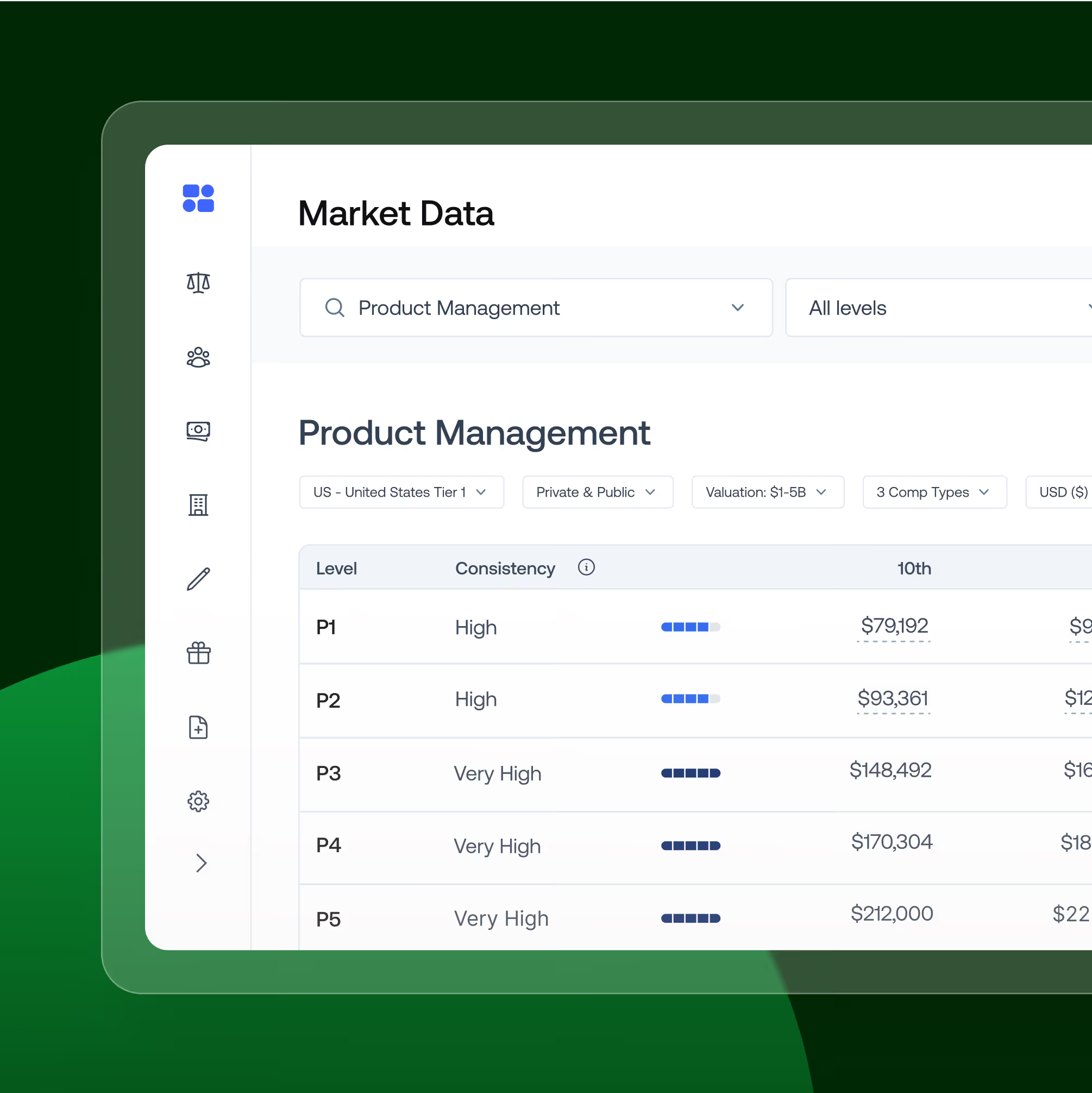
Building Market-Aligned Tech Compensation Strategies
Static salary bands built on annual survey data begin to decay the moment they're published. In a market where base salaries, equity refresh grants, and signing bonuses move quarter to quarter, reactive offers aren't a compensation strategy; they're a symptom of not having one.
The shift from reactive to strategic starts with leveling consistency. When your engineering ladder doesn't map cleanly to market data, every benchmarking decision becomes a judgment call, and judgment calls at scale create internal equity gaps before you've noticed anything is off.
Benchmarking done well means your team knows what the market pays for a given role, where you've decided to position against it, and can make offers with confidence rather than improvisation.
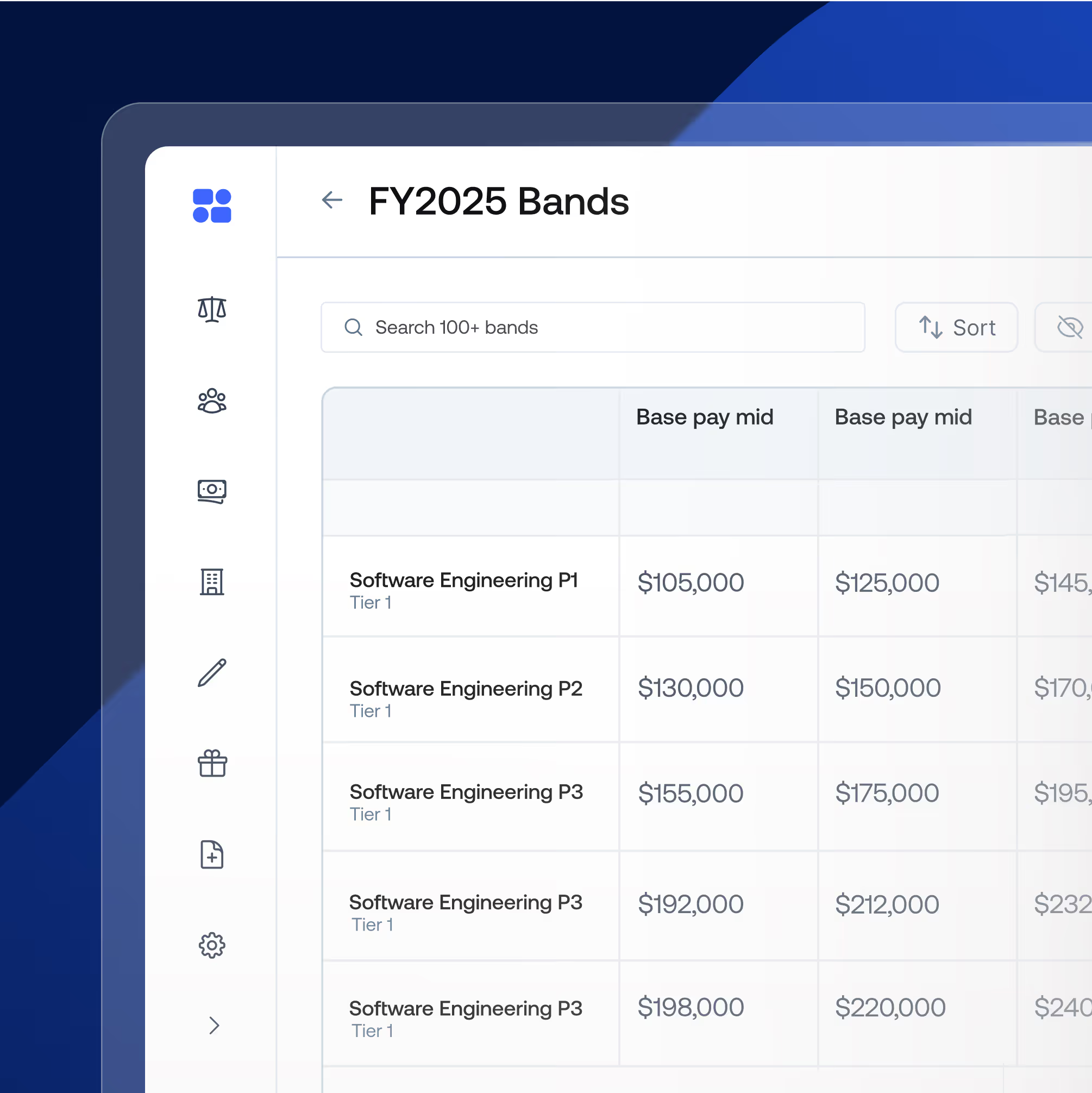
Accounting for Remote & Distributed Teams
The question isn't just what the market pays for a role. It's which market you’re competing in and how consistently you apply that decision.
Geo-agnostic pay simplifies administration but can create budget pressure if benchmarks don’t reflect where talent is sourced. Geo-based pay aligns with local labor costs but introduces risk when employees relocate or hiring pools shift.
The challenge isn’t choosing one model. It’s having accurate, current data across both. With real-time, location-specific benchmarks, teams can compare markets, model pay strategies, and make decisions they can stand behind.

Data Sources Behind Reliable Benchmarks
Traditional survey providers offer data that’s structured and broadly recognized, but carry a built-in lag. By the time results ship, the data is six to 12 months old, and in a market that moved materially in that window, you're making decisions off last year's reality.
Real-time data providers pull from continuously updated sources: HRIS integrations, offer acceptance data, and verified compensation records, surfacing benchmarks on demand. Pave's dataset spans 8,700+ companies, so the median base salary benchmarks for a Staff Engineer today reflects what companies are actually paying.
The difference isn't just freshness. It's also leveling: traditional surveys require manual job matching to normalize across frameworks, while Pave’s AI-powered job matching process handles it automatically with no interpolation required.

Equity Compensation Structures in Tech Companies
Total compensation benchmarking for tech companies can't stop at base salary. Equity is often the deciding factor in whether a candidate accepts an offer—and the most common source of confusion, misaligned expectations, and vulnerability to counteroffers. The types of equity compensation at tech companies vary significantly by stage, and understanding the structure matters as much as knowing the numbers.
Benchmarking equity accurately requires knowing not just the grant value but also the vesting schedule, refresh cadence, and whether the structure is competitive relative to the company's lifecycle stage.

Continuous Benchmarking
When Companies Should Update Benchmarking
Compensation benchmarking for tech companies isn't an annual calendar item. It's an operational signal system. These are the moments when outdated benchmarks create real business risk.
- Entering New Hiring Markets: Expanding to a new metro or country means new labor market dynamics. Your existing bands almost certainly don't price the talent pool you're now competing for.
- Fundraising Rounds: Post-funding is when hiring velocity spikes. It's also when you're most likely to overpay due to urgency, or underpay because your bands were set at the prior stage.
- Adding New Job Families: Opening roles in security, data infrastructure, or growth marketing for the first time requires fresh benchmarks. Your existing frameworks won't cover them accurately.
- Offer Decline Rate Increases: If candidates are citing compensation as a reason for declining, your benchmarks are trailing the market. The signal is real. Act before it shows up in your hiring metrics.
- Internal Compression Emerging: When new hires start earning more than tenured employees at similar levels, you have a retention and equity problem with a benchmarking gap that's compounding quietly.
- Rapid Headcount Growth: Scaling from 50 to 200 people means hundreds of individual compensation decisions. Without updated benchmarks, inconsistency builds into the foundation of your pay structure.
Tech Compensation Benchmarking FAQs
You have questions, we have answers. Explore some frequently asked questions about tech compensation benchmarking.
There are two main approaches. Geo-agnostic benchmarking uses a single national pay rate regardless of location. It's simpler to administer but can be expensive in lower-cost markets. Geo-tiered benchmarking applies location multipliers based on cost-of-labor zones. It scales the budget more efficiently but introduces risk when employees relocate after being hired. Whichever model you use, the benchmarks behind it need to reflect the actual geographies you're hiring in, not estimates. Pave's data covers remote and location-specific pay by role and level, so you can model both approaches before committing to one.
There are two main categories: traditional annual surveys and real-time data networks. Annual surveys from providers like Mercer and Radford offer broad coverage but carry a built-in lag of six to twelve months. By the time results are published, the data may no longer reflect current market conditions. Real-time networks pull continuously from HRIS integrations, offer acceptance data, and verified compensation records. Pave's network draws from 8,700+ companies with continuous data refresh and built-in leveling normalization, so compensation teams can act on current benchmarks rather than waiting for the next survey cycle.
Benchmarks should be reviewed after any fundraising round, when entering a new hiring market, when adding a new job family, and when offer decline rates or internal compression signal a market disconnect. For high-growth companies, an annual review cycle is usually too slow. Each compensation decision made on stale data compounds into a structural equity problem over time. The most effective approach treats benchmarking as an ongoing process: reviewing market data at the start of each hiring cycle and flagging roles where the current band is more than one quarter old.
The most common types are RSUs, stock options, refresh grants, and performance equity. RSUs vest on a schedule and deliver shares directly, making them standard at public and late-stage companies where value is predictable. Stock options give employees the right to buy shares at a fixed strike price, with value depending on the gap between strike and fair market value. Stock options come in two forms: incentive stock options, which carry preferential tax treatment but have eligibility limits, and non-qualified stock options, which are broader but taxed as ordinary income upon exercise. Refresh grants are annual or performance-triggered top-ups that restore vesting runway for high performers and are increasingly used as a retention lever. Performance equity ties grants to company or individual milestones and is most common at public companies and for senior leadership.
Maximize the impact of every pay decision with Pave