Variable Compensation Software That Aligns Pay With Performance
Purpose-built for HR and finance teams that need to design, calculate, and communicate variable pay programs accurately across roles, plans, and growth stages without the manual overhead.

Running Variable Compensation at Scale
Most HR and Total Rewards leaders don't struggle to understand variable compensation. They struggle to run it consistently once it spans multiple teams, plan types, and performance cycles. The operational challenge isn't designing the plan. It's maintaining accuracy, auditability, and employee trust as the organization scales.
Benchmarks and Structure
How Companies Structure Variable Pay
Variable compensation as a share of total pay varies by role, company stage, and how closely the work connects to measurable outcomes. The risk of a misaligned variable pay structure isn't just retention. It's behavioral.
Plans that incentivize the wrong outcomes, set unattainable targets, or fail to communicate how payouts are calculated erode trust faster than underpaying on base. Structuring variable compensation is as much about clarity and consistency as it is about the numbers.Ranges reflect common market practices and vary by industry, funding stage, and competitive positioning. Use Market Data Pro to benchmark variable pay for your specific peer group.
Why Spreadsheets Break Variable Compensation Plans
Most variable compensation programs start in spreadsheets. And for a while, they work. Then headcount doubles, plan rules get more complex, and the cracks start showing up in payroll errors, finance reconciliation issues, and employees who don't trust their numbers. The spreadsheet isn't the problem; the problem is that variable pay is a system, and spreadsheets are documents.
Purpose-built variable compensation software replaces manual processes with automated calculations, structured workflows, and transparent employee-facing breakdowns, so the program does what it was designed to do.
Variable Compensation Software
Scale Variable Compensation With Pave
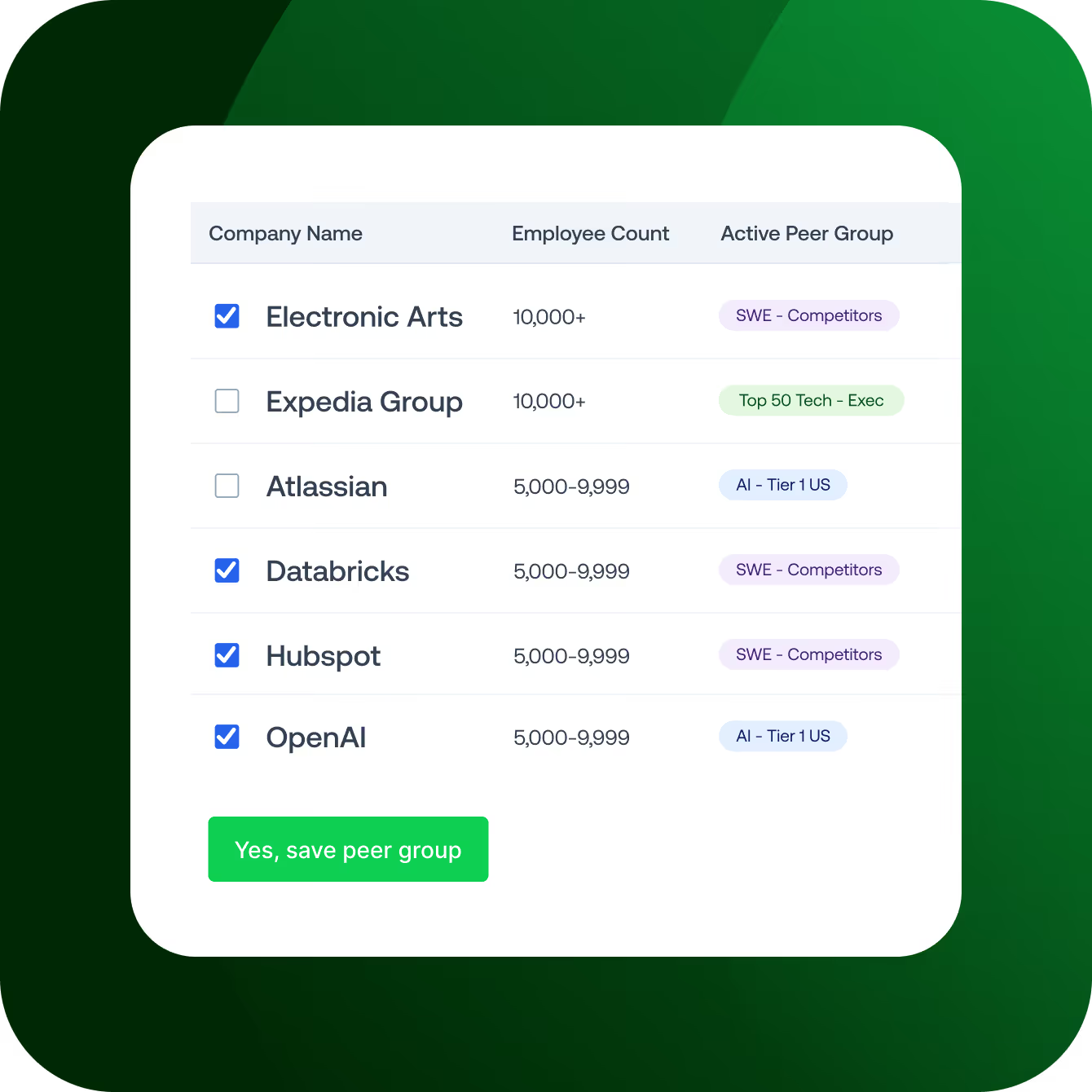
Pave's Compensation Planning workflows support the complexity that makes variable pay hard to run well at scale—multiple plan types, cross-functional approvals, finance alignment, and the employee communication that makes the whole program credible.
- Real-time visibility across teams: Managers see how their team is tracking against targets, Finance sees total budget exposure by plan, and HR sees the full picture—all from the same source of truth.
- Built in auditability: Every calculation, approval, and override is logged. When someone asks why a payout was X instead of Y, the answer is already documented.
Variable Compensation Software FAQs:
You have questions, we have answers. Explore some frequently asked questions about variable compensation.
Variable compensation is the portion of total pay that changes based on performance, results, or defined criteria. Base salary is fixed and paid regardless of outcomes. Variable pay is conditional: it's earned by meeting specific targets and typically fluctuates from cycle to cycle. Common forms include sales commissions, annual bonuses, profit-sharing, spot awards, and performance-based equity. Where base pay provides income stability, variable compensation is designed to align individual or team behavior with the outcomes the business most needs to drive.
It depends on the role. Variable compensation is generally a larger share of total pay for roles with direct revenue responsibility, like sales, and a smaller share for functions like engineering, product, and G&A. Executive and senior leadership roles tend to have the highest overall variable mix when long-term incentives are included. The right proportion also depends on the company stage, industry, and how closely a role's output can be tied to measurable outcomes. The best way to assess what's competitive for your specific roles is to benchmark variable pay against your actual peer group rather than relying on broad industry averages.
Companies should review variable compensation plans when headcount growth makes administration error-prone, when new business lines or revenue motions require different plan logic, when entering new geographic markets, or when attainment data shows the current plan is misaligned with what's achievable. Treating plan redesign as a major annual project rather than an ongoing calibration is a common mistake. A better approach is a formal review at the start of each fiscal year and after any significant go-to-market change, using variable compensation software that makes updates configurable rather than requiring a full rebuild each time.
Managing variable compensation gets harder as organizations grow because multiple plan types run simultaneously across commissions, bonuses, profit-sharing, and spot awards. Mid-cycle amendments require retroactive adjustments to calculations, while proration rules for new hires, leaves of absence, and role changes add another layer of complexity. Finance needs budget visibility before payouts are approved, employees expect a clear breakdown of how their numbers were calculated, and every payout decision needs an audit trail that holds up under questioning months later.
Maximize the impact of every pay decision with Pave