Compensation Strategy for Manufacturing Organizations
Design competitive compensation programs for your corporate and leadership population, backed by real-time market data, leveling frameworks, and performance incentives built for the complexity of a manufacturing environment.

Designing Compensation Across a Complex Workforce
The people designing and managing compensation in manufacturing are operating in one of the most complex talent environments in the market. From process engineers to quality directors to plant managers, each population requires a different compensation logic, and the team responsible for getting it right rarely has the data infrastructure to match.
When tenure progression and leadership ladders aren’t connected to a coherent system, the gaps show up as supervisor burnout and spikes in turnover. Both are expensive and hard to reverse. And spreadsheets stop supporting consistent decisions once compensation programs span multiple facilities, job families, and regional markets. That’s why compensation strategy in manufacturing functions is a workforce stability lever, not a pay philosophy document.
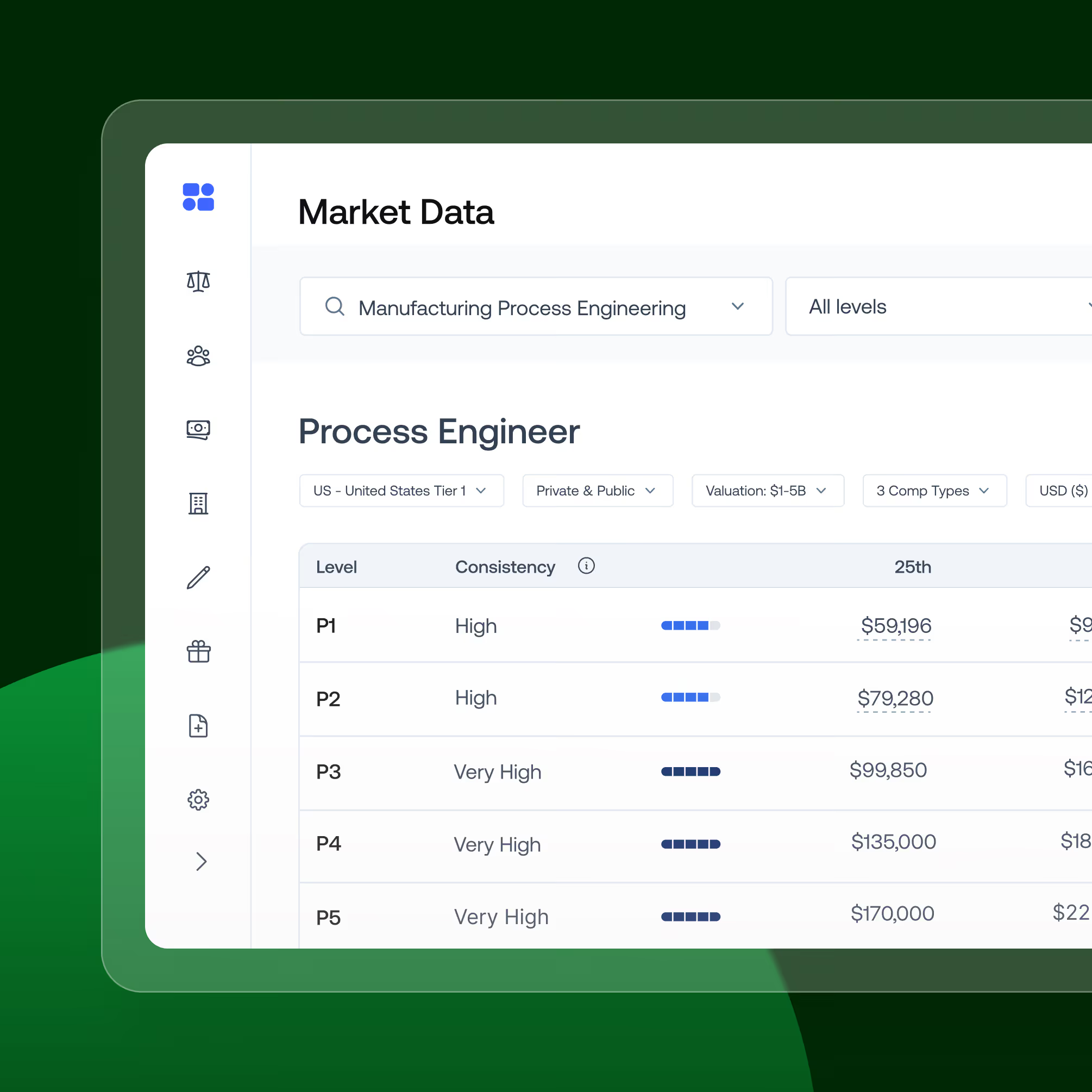
Managing Compression Before it Impacts Retention
Manufacturing compensation teams are designing programs for a workforce that spans production operators and senior engineers, first-line supervisors and plant directors. Compression between frontline leadership and the roles below them, and misaligned incentives, are two of the most common risks in manufacturing pay structures. Both are solvable with the right data and program design.
Individual contributors need career pathways that don't require moving into management to advance, and leaders need incentive structures that connect their decisions to outcomes the business actually cares about. Getting both right in the same program is where most spreadsheet-based approaches fall short.

Incentives That Drive the Right Outcomes
Manufacturing leadership incentives typically align with plant profitability, quality outcomes, and operational targets. Designing those programs well means balancing individual accountability with team performance—and ensuring metrics are specific enough to be meaningful without being so narrow that they create problems they were meant to prevent.
Speed-only targets encourage unsafe shortcuts. Individual output bonuses undermine team coordination. The best program designs use documented formulas, defined eligibility rules, and consistent application so every payout is auditable and defensible when finance asks questions.
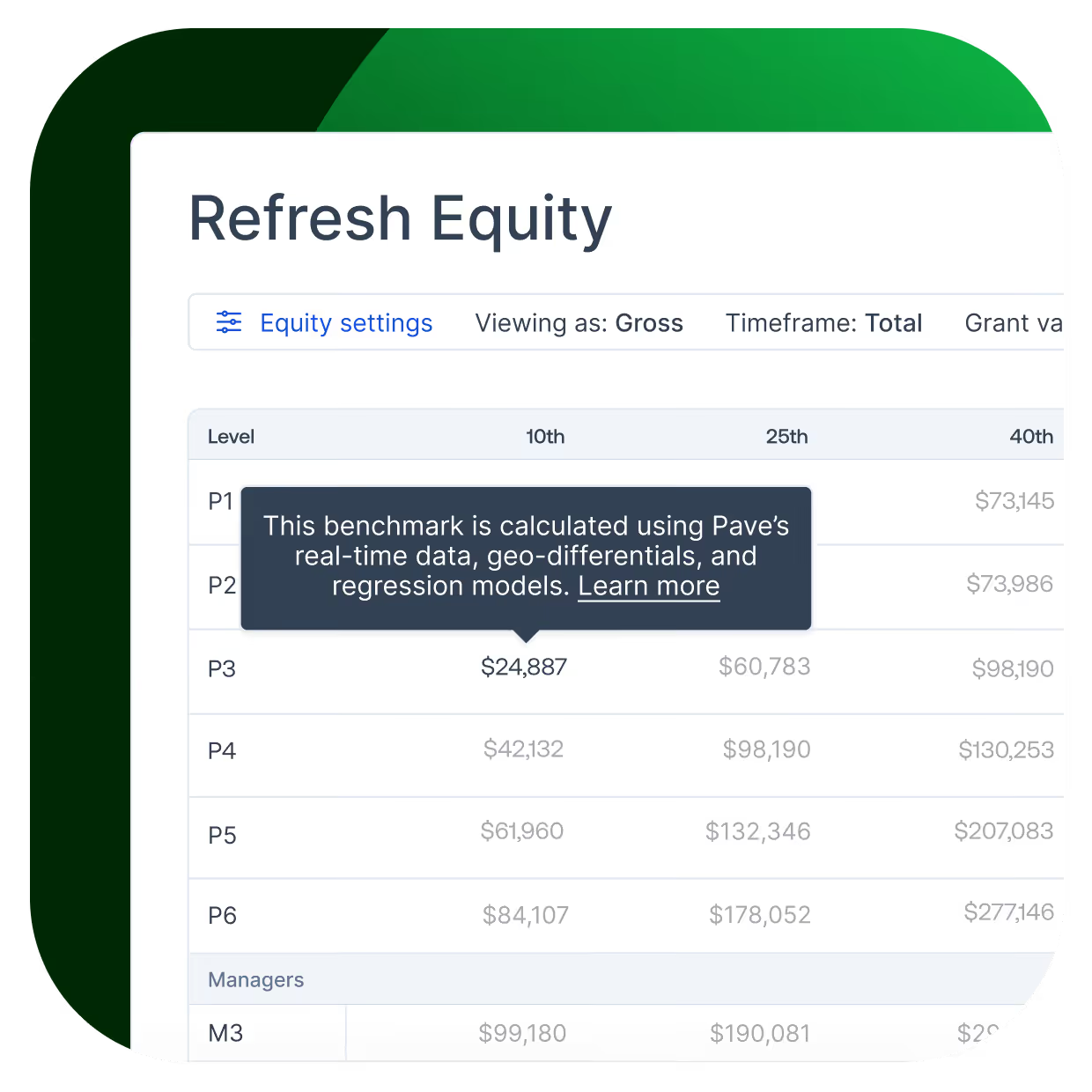
Compensation Software for Manufacturing
Why Manufacturing Compensation Requires More than a Spreadsheet
Spreadsheets break under manufacturing complexity. Managing compensation programs across multiple facilities and job families in a shared Excel file introduces version control problems, calculation errors, and audit trails that don't hold up under scrutiny.
- Real-time market data, no surveys required: Pave's Market Data connects directly to your HRIS and gives you access to over 1 million data points from 8,700 integrated companies.
- Multi-location consistency: Pave's Market Pricing tool blends data across sources and smooths out gaps, so you can build defensible pay ranges for any role, across any site.
- Automated merit cycles: Pave's Compensation Planning replaces spreadsheet-based cycles with structured workflows, role-based permissions, and real-time budget guardrails.
- Auditability for finance & operations: Every compensation decision is traceable. No more "who approved this?" moments during budget reviews or compliance audits.
Manufacturing Compensation Strategy FAQs
You have questions, we have answers. Explore some frequently asked questions about manufacturing compensation strategy.
Effective compensation design for manufacturing's salaried population means building pay bands with deliberate structure across job families, and regularly auditing compression risk between individual contributor roles and first-line management. Giving engineers and program managers a technical advancement track, one that doesn't require moving into people management to progress, reduces attrition and preserves institutional knowledge. The goal is a structure where advancement is possible without forcing career paths, and where leadership roles are financially worth pursuing.
The most common incentives are tied to plant profitability, quality outcomes, and operational targets that connect individual decisions to business results. The best-designed programs balance individual accountability with team performance so leaders are rewarded for building strong organizations, not just their own numbers. Incentives focused solely on speed or individual output tend to create the operational risks they were meant to prevent.
Compensation strategy in manufacturing isn't an annual HR event. It's an ongoing operational lever. The clearest triggers are opening new facilities, automation that changes job scope, wage pressure from regional competitors, retention issues, promotion bottlenecks, and shift restructuring. Any one of these signals that the current pay structure may no longer reflect the work, the market, or workforce expectations.
Pay progression and promotion pathways need to operate independently. If the only way a senior engineer or program manager can earn more is to move into people management, you're forcing career paths and losing strong individual contributors to competitors who offer technical ladders. Building internal equity across sites ensures the same role earns comparable pay regardless of location, which is foundational to both compliance and a compensation culture people trust.
Maximize the impact of every pay decision with Pave