For much of 2024 and 2025, one particular workforce narrative dominated the technology press: artificial intelligence would devour software engineers first. The logic tracked. If AI can write code, why keep paying expensive engineers to do the same?
New research from Pave's real-time workforce data from more than 8,700 companies, tells a different story. Hiring for software engineers is rising—and the reasons why illuminate something very important about how AI is actually reshaping technical work.
Overall Hiring for Software Engineers is Steady
In short, Pave's data doesn't support the AI displacement narrative. Since Q4 2023, software engineers have accounted for between 19.3% and 22.5% of all new hires joining Pave's dataset each quarter—a signal of stability and resilience, not volatility.
More importantly, absolute hiring volumes paint an even rosier picture: a consistent set of companies contributing to Pave's real-time dataset over the past two years hired 9.0% more software engineers in 2025 than 2024.

If AI were systematically displacing software engineers, you'd expect to see all of these numbers dropping. They're not.
One explanation for this seemingly surprising result is Jevons paradox, an old economics concept which states: as a resource becomes more efficient to use, total consumption of that resource tends to rise, not fall. AI tools certainly make software engineers more productive, so perhaps those productivity gains are expanding demand for engineering talent rather than eliminating jobs.
On the surface, this is good news. However, these aggregate hiring figures obscure a talent shift worth examining more closely.
Junior Talent is Losing Out in the AI Age
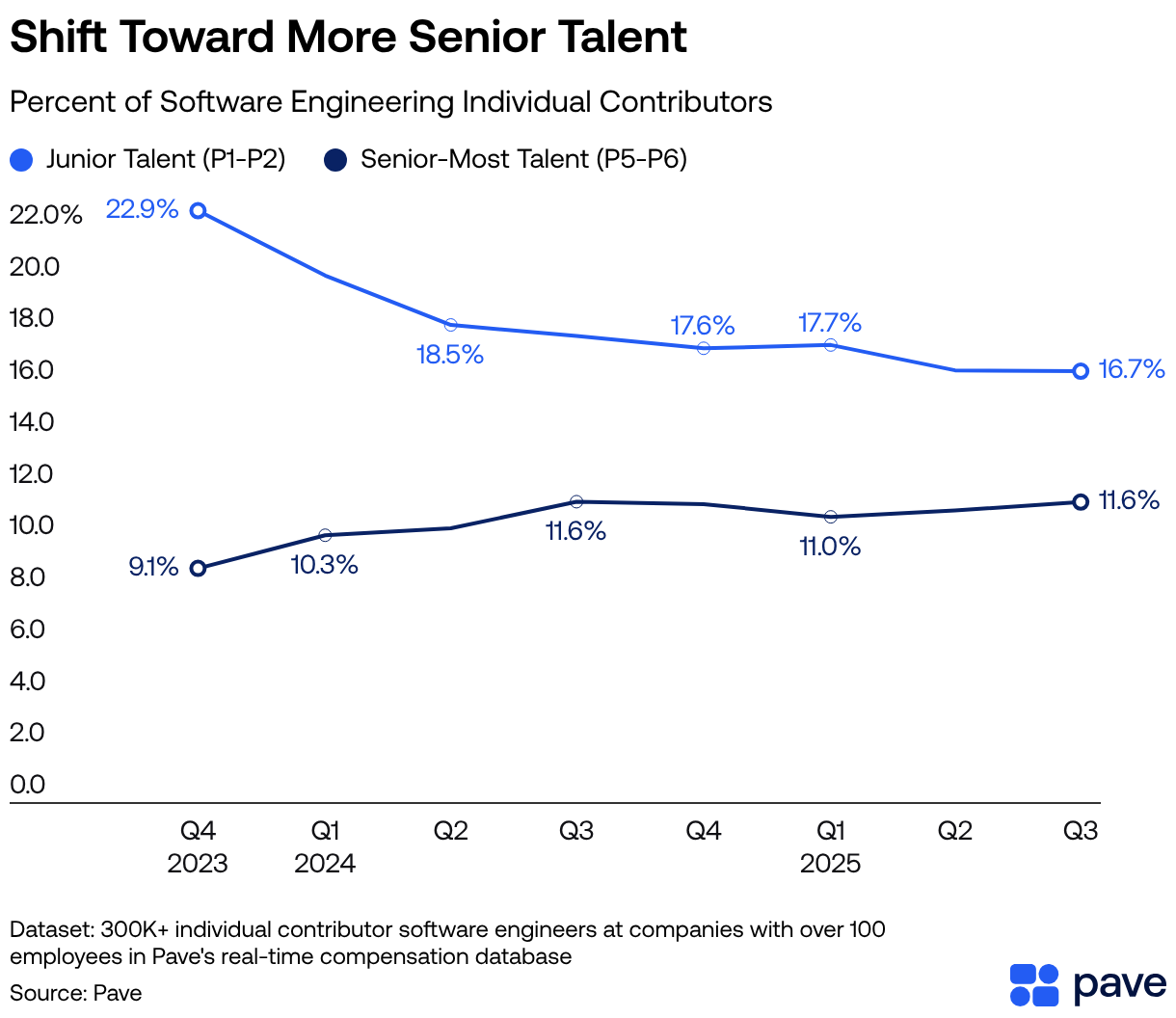
Digging deeper into the data, companies appear to be prioritizing experienced engineering talent as AI adoption accelerates. Since Q4 2023, the percentage of all software engineers in entry-level individual contributor roles (levels P1 and P2 in Pave's job architecture system) has dropped steadily from a high of 22.9% to a low of 16.7% as of Q3 2025. Meanwhile, senior individual contributors (levels P5 and P6) have grown from 9.1% to 11.6% of all software engineers. The chart below does not show mid-career individual contributors (levels P3 and P4), who still account for the majority of all software engineers.
A related metric reinforces the trend. The average age of engineers is rising across all major job family areas, including AI/ML engineering, hardware engineering, and software engineering. This suggests a growing bias toward senior talent beyond software engineering.

Looking Forward
Reports of software engineering's demise are premature. As of early 2026, companies continue to hire software engineers at high volumes—though they increasingly concentrate that demand at the senior end of the experience spectrum.
For individuals weighing software engineering as a career path, the implication is clear: technical skills alone no longer differentiate you enough. The jobs of the future sit at the intersection of engineering ability and broader business judgment, including commercial acumen, communication skills, and problem-solving. An education that develops those skills alongside coding will likely age better than one focused on technical execution alone.
For employers, the investment case is straightforward. Senior engineers who can direct and extend AI capabilities are becoming a real source of competitive advantage. In a market where this talent is already scarce, the cost of hiring the best is rising fast.

Alex is the General Manager for Pave's Market Data product and the firm's Vice President of Strategy. He has more than two decades of experience in total rewards, including 10 years working at Aon plc developing and growing the Radford Survey platform.