Marilyn Monroe made her case for diamonds in 1953. But over seventy years later, the diamonds taking shape in the business world are far less glamorous.
AI transformation is leading organizational structures to shift. Lately, org charts are moving from the classic pyramid shape with lots of entry-level jobs at the bottom, toward a diamond shape, with fewer entry-level and senior leadership positions, but lots of mid-career professionals filling out the middle.
Data from Pave shows entry-level employees (P1s) at over 8,700 companies dropped from 6.8% to 4.6% over two years (a 32% relative decline). Previous analysis from the Pave Data Lab team also found that at large public tech companies, workers aged 21–25 fell from 15% to about 6% in 30 months. Companies are increasingly prioritizing senior contributors who can leverage AI tools to increase their productivity and effectiveness, instead of bringing on junior workers who require training.
What's Driving the Org Structure Shift?
Pave’s CEO, Matt Schulman, notes it's very challenging to pin down. He hypothesizes it is a convergence of a few forces:
- AI-driven automation is streamlining tasks that once gave junior employees vital early-career experience. Work that might otherwise have been assigned to a more junior employee is now executed by an “AI-amplified” senior team member.
- Economic pressures are forcing organizations to scrutinize every hire. Because junior staff represent a longer-term investment, organizations with constrained budgets might be making trade-offs on what IC roles to prioritize.
- Hiring freezes often disproportionately impact entry-level positions (at least initially). When hiring slows or stops, organizations rarely replace departing junior staff or grow their entry-level headcount, further eroding the base of the talent pipeline.
Other downstream effects are already taking shape. For example, Lightcast analysis of BLS data shows that young adults (20–24) holding a bachelor's degree now face higher unemployment rates than peers with an associate's degree or no degree at all — a historic inversion that, if it holds, will have seismic implications for businesses and community leaders across the country.
Currently, when job descriptions are posted, there seems to be a stronger preference to hire in the middle than in previous economic cycles. Lightcast found that 77% of postings in the four top sectors seek candidates with 2–9 years of experience. Only 12% target entry-level, and 10% go for over 10 years.
The Top of the Org Structure Is Aging Out
As fewer entry-level employees join organizations, a parallel shift is happening at the other end of the spectrum: seasoned professionals are leaving the workforce at an unprecedented rate. By 2032, approximately 18.4 million highly experienced workers aged 55–64 with advanced education will retire, while only 13.8 million younger professionals with similar credentials are projected to enter the workforce. The overall labor force is expected to grow by 6.2 million by 2033, yet over a third of that expansion will be accounted for by workers aged 65 and above, signaling rapid workforce aging.
A Diamond-Shaped Business Continuity Problem
As both ends of the talent pipeline narrow, this creates a structural weakness that threatens long-term organizational resilience. When entry-level hiring slows to a trickle, the entire process of developing future leaders and skilled professionals stalls. Mid-career talent doesn't simply materialize; it is cultivated from a steady influx of junior employees who gain experience, mentorship, and institutional knowledge over time. Without that foundation, the middle of the workforce will inevitably hollow out, leaving organizations scrambling to fill critical roles from an ever-smaller pool.
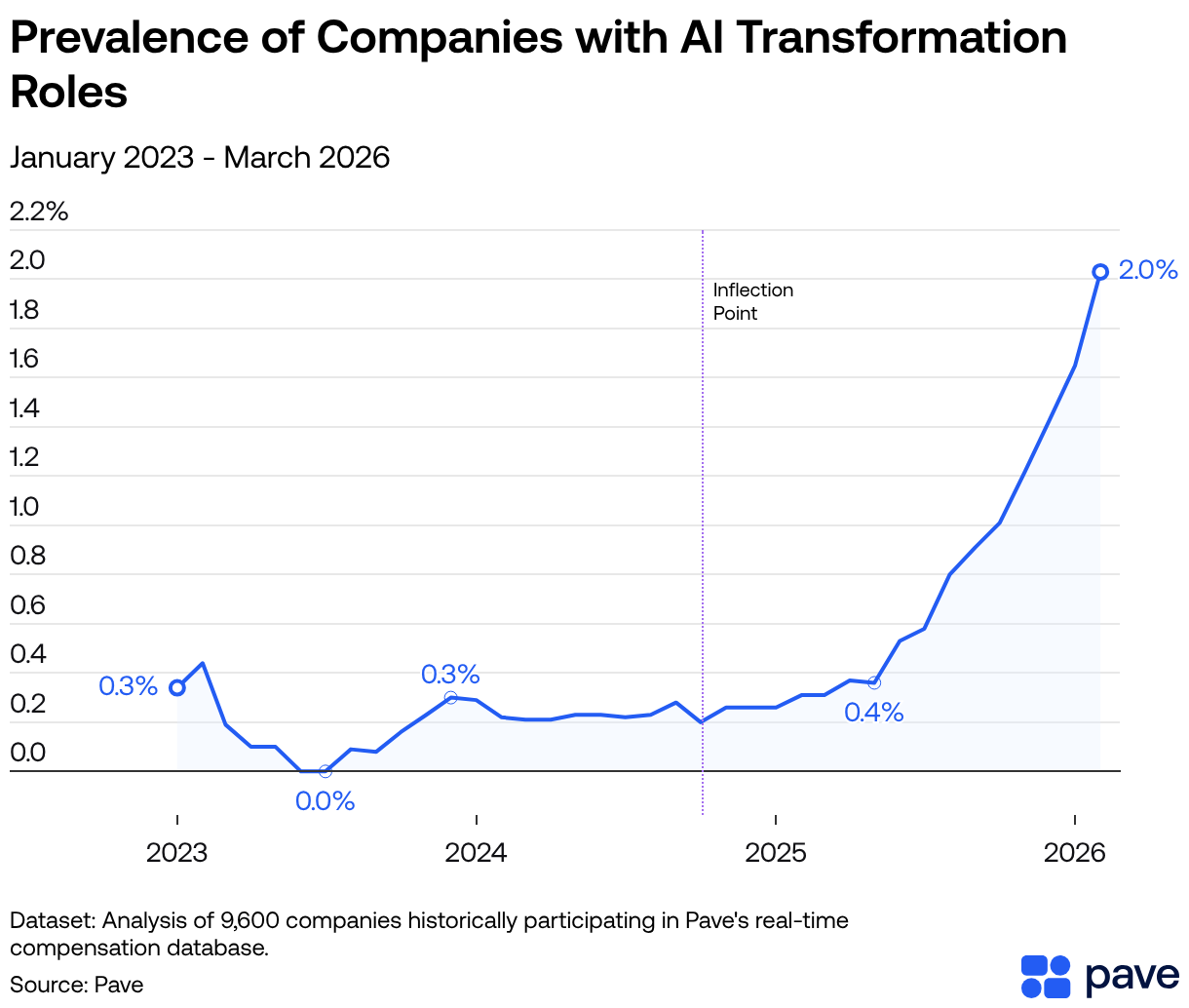
The emerging roles that AI is creating make this even more urgent. Consider the AI Transformation Lead. This is the person responsible for identifying where AI can generate the most value within an organization and leading the change management efforts to realize it. As the chart below shows, the share of companies with at least one AI Transformation Lead grew from 0.2% to over 2.0% in just three years, with a sharp acceleration in mid-2025 as organizations moved from experimentation to execution.
Emerging roles like this can rarely be hired off the shelf. They demand a rare combination of technical fluency, strategic vision, internal business context, and change management experience — skills that are built over years, not months. Forward Deployed Engineers, another fast-growing category, command a 40% pay premium over traditional implementation professionals, reflecting just how scarce that skill blend is. When the entry-level pipeline dries up, the development path to roles like these dries up with it.
Deloitte’s 2025 Human Capital Trends found that two-thirds of hiring managers already believe entry-level hires are underprepared, underscoring a growing readiness and capability gap. Meanwhile, Bain projects U.S. workforce growth at just 4% by 2050, highlighting the urgency of building robust pipelines before demographic headwinds intensify.
This isn't a recruiting challenge. It's a business continuity crisis hiding in plain sight.
Is It Time to Break Up with the Diamond?
Some companies are redesigning entry-level work along with hiring more. IBM is tripling U.S. entry-level hiring in 2026, shifting roles from task execution to analysis, problem-solving, and AI oversight. New developers work with clients earlier. McKinsey is increasing North American hiring by 12% and screening applicants with gamified critical-thinking tests rather than prior business knowledge. Cognizant recruits liberal arts graduates for entry-level technical roles.
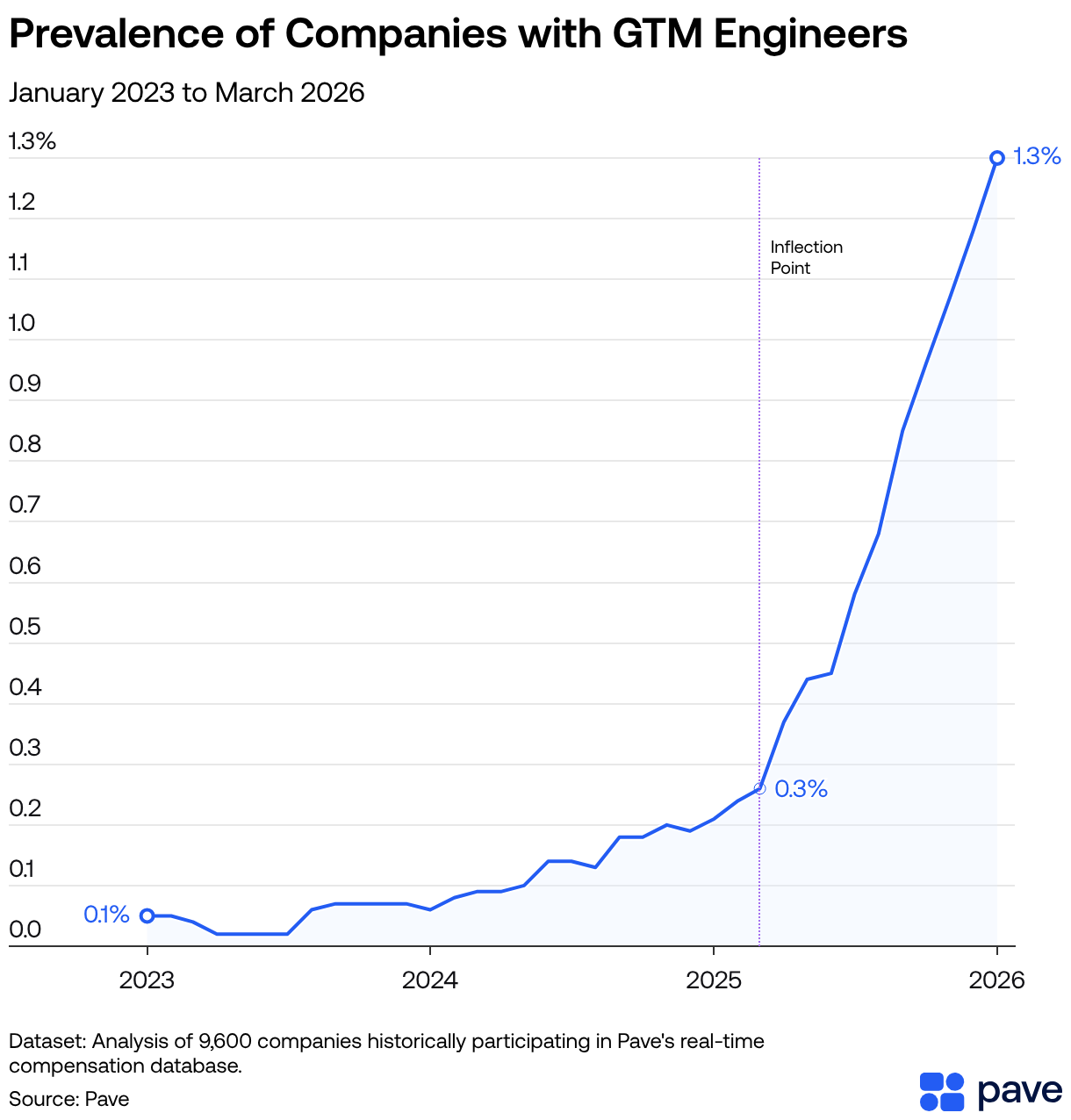
Pave's analysis of five emerging AI-era roles offers a glimpse of what the other end of that pipeline could look like. The share of companies employing Go-to-Market Engineers grew from virtually zero to 1.3% in three years, with similar trajectories for Forward Deployed Engineers and AI Transformation Leads. Given the relative scarcity of these individuals, these roles command significant compensation premiums. Companies that invest in entry-level hiring today are building the bench that feeds tomorrow's highest-value positions. The alternative is competing in an increasingly expensive external market for people with skills that barely had a name two years ago.
Reshaping the Organizational Structure
As IBM CHRO Nickle LaMoreaux put it, “The companies three to five years from now that are going to be the most successful are those that double down on entry-level hiring."
As roles are created and reshaped by AI, many organizations that treat entry-level hiring as the on-ramp to these emerging positions will have a structural advantage. Those that don't will find themselves bidding against every other company for a thin slice of mid-career talent in job categories that barely existed before 2025.
Diamonds may last forever, but do diamond-shaped workforces have a shelf life?

Charles is a member of Pave's marketing team, bringing nearly 20 years of experience in HR strategy and technology. Prior to Pave, he advised CHROs and other HR leaders at CEB (now Gartner's HR Practice), supported benefits research initiatives at Scoop Technologies, and, most recently, led SoFi's employee benefits business, SoFi at Work. A passionate advocate for talent innovation, Charles is known for championing data-driven HR solutions.
FAQs
What is a diamond-shaped org structure?
A diamond-shaped organizational structure describes a team with a shrinking base of entry-level employees, a shrinking top of more tenured professionals, and a concentrated middle.
Why are entry-level jobs declining?
AI-driven automation, economic pressures, and hiring freezes are converging to reduce entry-level jobs and headcount. Pave data shows entry-level employees dropped from 6.8% to 4.6% of the workforce in two years, and 77% of job postings in top sectors target candidates with 2–9 years of experience.
How does AI affect entry-level jobs?
AI is automating many of the tasks that once gave junior employees their early-career experience. Senior team members amplified by AI tools are absorbing work that would have gone to newer hires, while new AI-era roles like GTM Engineers and AI Transformation Leads require skill combinations that take years to develop.
How can companies fix a diamond-shaped org structure?
To remedy a diamond-shaped organizational structure, businesses are rethinking what entry-level jobs can look like. Companies like IBM, McKinsey, and Cognizant are redesigning entry-level roles around analysis, problem-solving, and AI oversight rather than routine task execution.