Here's a scenario that plays out in thousands of organizations every spring:
Your compensation team spends months designing a fair, thoughtful merit cycle. You've benchmarked roles, allocated budgets equitably, and run the numbers ten different ways to ensure your decisions align with your philosophy.
Then you hand it off to managers to communicate.
And suddenly, the carefully crafted narrative falls apart. One manager tells their team, "This is all HR gave me to work with—sorry." Another avoids the conversation entirely. A third accidentally implies that top performers didn't get differentiated rewards because they fumbled the explanation.
The result? Employees who should feel valued instead feel confused, undervalued, or even misled. Not because the compensation decisions were wrong, but because the communication was.
Here's the truth compensation leaders need to hear: Your managers are your pay perception ambassadors, whether they're ready for it or not. Recognizing this can inspire managers to feel trusted and motivated to communicate effectively.
Why Manager Communication Matters More Than You Think
We know that employee perceptions of pay program fairness significantly impact talent outcomes. According to Gartner research:
- Intent to stay increases by 58%
- Discretionary effort increases by 124%
- Engagement increases by 392%
But fairness isn't just about getting the math right. Research consistently shows that process fairness—how decisions are made and communicated—matters as much or more than the actual outcomes.
An employee who receives a 3% raise and understands exactly why, how it was determined, and how it fits into their career trajectory will feel more valued than an employee who receives 4% with no context or a confusing explanation.
And who controls that narrative? Your frontline managers.
The Manager Enablement Gap
Most organizations dramatically underinvest in manager enablement for compensation conversations, leaving managers feeling underprepared and overwhelmed, ultimately affecting their confidence and effectiveness.
- January: Compensation team hosts a training session. They explain the philosophy, walk through the planning tool, review policy guidelines, and answer questions. Managers nod along. Some take notes. Everyone leaves feeling prepared.
- March: Compensation planning actually begins. Managers log in to the tool they haven't seen in 12 months. They don't remember how to navigate it. They've forgotten the budget allocation methodology. They're unclear on what flexibility they have to make exceptions.
- April: Reward letters go out. Managers are supposed to have meaningful conversations with their teams. But they're unprepared, anxious, and armed with talking points they don't fully understand.
The problem isn't that managers don't care. It's that we set them up to fail.
The Cost of Poor Manager Communication
When managers aren't properly enabled, the consequences ripple across your organization:
- Eroded trust. Employees lose confidence not just in their manager, but in the entire compensation program. "If my manager can't explain this clearly, maybe the whole system is rigged."
- Increased attrition. Top performers who receive substantial raises but have poor communication are still at risk of retention. They don't feel valued because the message didn't land.
- Inconsistent messaging. Without clear guidance, managers improvise. Some overpromise. Others deflect blame to HR. The result is a fractured narrative that undermines your compensation philosophy.
- Manager stress and avoidance. Unprepared managers delay or skip compensation conversations entirely. When they do happen, they're rushed, awkward, or defensive.
- Lost opportunity for motivation. A compensation conversation should energize employees and reinforce what high performance looks like. Poor communication turns it into a transactional, uncomfortable exchange.
What Great Manager Enablement Looks Like
The best compensation teams don't just train managers—they equip them with the context, tools, and confidence they need to be effective pay communicators.
1. Just-in-Time (JIT) Learning
Remember that training session in January? Your managers likely forgot most of it by March.
Instead of front-loading enablement, embed it directly into the workflow. Implementing JIT learning ensures managers receive timely, relevant support, boosting their confidence during pay conversations. When a manager logs in to allocate merit increases, they should see:
- A quick reminder of your compensation philosophy
- Guidance on the specific decisions they're making today
- Answers to the questions they're most likely to have right now
Providing JIT context is what Pave's Planner Guides feature does—it surfaces the proper context at the right moment, personalized to each manager's role and stage in the cycle.
2. Compensation Conversation Frameworks
Most managers have never been trained on how to actually have a compensation conversation. Those who have are likely a little rusty, as it has been 6-12 months since the last time they needed those skills.
A strong framework helps managers:
- Prepare: Review the employee's performance, contributions, and compensation context before the conversation
- Explain the decision: Articulate not just the number, but the "why" behind it in terms that connect to the employee's work.
- Provide context: Help employees understand how their compensation fits within the broader market, internal equity, and career trajectory.
- Address questions: Anticipate common concerns and have clear, consistent responses ready
- Connect to the future: Frame compensation as part of an ongoing relationship, not a one-time transaction.
Here is where CompIQ Workbook for Managers can be leveraged—a crash course in Compensation 101 and examples of high-impact conversation framing.
{{mid-cta}}
3. Transparency Tools
Managers feel more confident when they have access to the same data and context that informed the compensation decisions.
Show them:
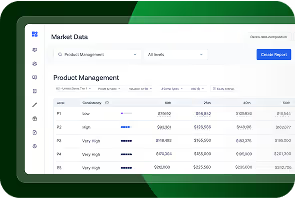
- Market data: Where does this role sit relative to the benchmark?
- Internal equity view: How does this employee's compensation compare to peers in similar roles?
- Budget context: What budget was allocated and why?
- Vesting schedules: For equity compensation, what's the complete picture of their earnings?
- Total rewards view: Help managers communicate the full value, not just base salary
When managers can see the complete picture, they can tell a more compelling and accurate story. By leveraging Pave’s Compensation Planning, you retain data control while increasing compensation context setting
4. Customized Messaging by Stakeholder
Managers and compensation planners need different enablement. A new frontline manager requires different support than a VP who has completed 20 cycles.
Segment your enablement:
- Frontline managers: Need practical walkthroughs, clear FAQs, and conversation scripts. They are developing compensation fundamentals while managing their first high-stakes conversations.
- Mid-level managers: Need focused guidance on handling edge cases, addressing internal equity questions, and managing conversations with underperformers.
- Executives: Need strategic context on organizational priorities, budget philosophy, and direction for cascading messaging across their organizations.
- HRBPs: Need both strategic context and tactical support refreshes to support people leaders at all levels as they navigate this year’s cycle. They will also benefit from the “why” behind program design, not just the “what.”
5. Preview and Practice
Let managers see exactly what their employees will see before the conversations happen.
With tools like Pave's Custom Reward Letter Builder, managers can preview the exact reward letter each employee will receive. This lets them:
- Spot potential areas of confusion that an employee may have
- Reference enablement materials and prepare for specific questions this employee might ask
- Ensure the written and verbal messaging aligns
Putting It Into Practice: A Manager Enablement Roadmap
Here's how to build a manager enablement program that actually works:
4-6 Weeks Before Planning
- Send a pre-cycle communication: Remind managers that compensation planning is coming, what they can expect, and where to find resources.
- Share the compensation philosophy refresher: A concise, accessible summary they can reference throughout the cycle. Don’t forget to add that into Pave's Planner Guides.
2 Weeks Before Planning
- Host a live Q&A session: Not a training presentation—an interactive discussion where managers can ask questions about this specific cycle.
- Distribute the CompIQ Workbook: Give managers time to familiarize themselves with the framework before they need it.
During Planning
- Activate in-app guidance: Use Pave's Planner Guides to surface contextual help as managers work through their allocations.
- Offer office hours: Dedicated time slots where managers can get quick answers without waiting for email responses.
- Monitor and intervene: Use Pave's Cycle Progress dashboards to identify managers who might be struggling and reach out proactively.
Before Reward Letters Go Out
- Personalize rewards statements: Use Pave’s Total Rewards to put the “total” in total rewards by providing employees with the full picture across compensation, equity, and benefits.
- Enable reward letter preview: Let managers see what employees will receive so they can prepare accordingly.
- Provide conversation scripts: Not a rigid word-for-word script, but key talking points and response frameworks. Help them focus on context, not just content.
- Role-play challenging scenarios: Co-host with an HRBP a session where managers can practice handling tough questions in a safe environment.
After Conversations
- Gather feedback: What questions did employees ask that managers didn’t feel prepared for? Where did managers feel most uncertain?
- Create an FAQ: Document the actual questions that came up and how you answered them—this will serve as a foundation for next year's enablement.
- Communicate: Leverage Pave’s Merit Cycle Retrospective Framework to capture key metrics and feedback about this year’s compensation cycle.
The Bottom Line
You can have the fairest, most thoughtfully designed compensation program in the world. But if your managers can't communicate it effectively, employees won't perceive it as fair.
Manager enablement isn't a nice-to-have. It's the bridge between your compensation strategy and employee perception. It's what turns numbers on a page into meaningful recognition that drives engagement, retention, and performance.
The question isn't whether you can afford to invest in manager enablement.
It's whether you can afford not to.
Download the Manager CompIQ Workbook today.

Charles is a member of Pave's marketing team, bringing nearly 20 years of experience in HR strategy and technology. Prior to Pave, he advised CHROs and other HR leaders at CEB (now Gartner's HR Practice), supported benefits research initiatives at Scoop Technologies, and, most recently, led SoFi's employee benefits business, SoFi at Work. A passionate advocate for talent innovation, Charles is known for championing data-driven HR solutions.