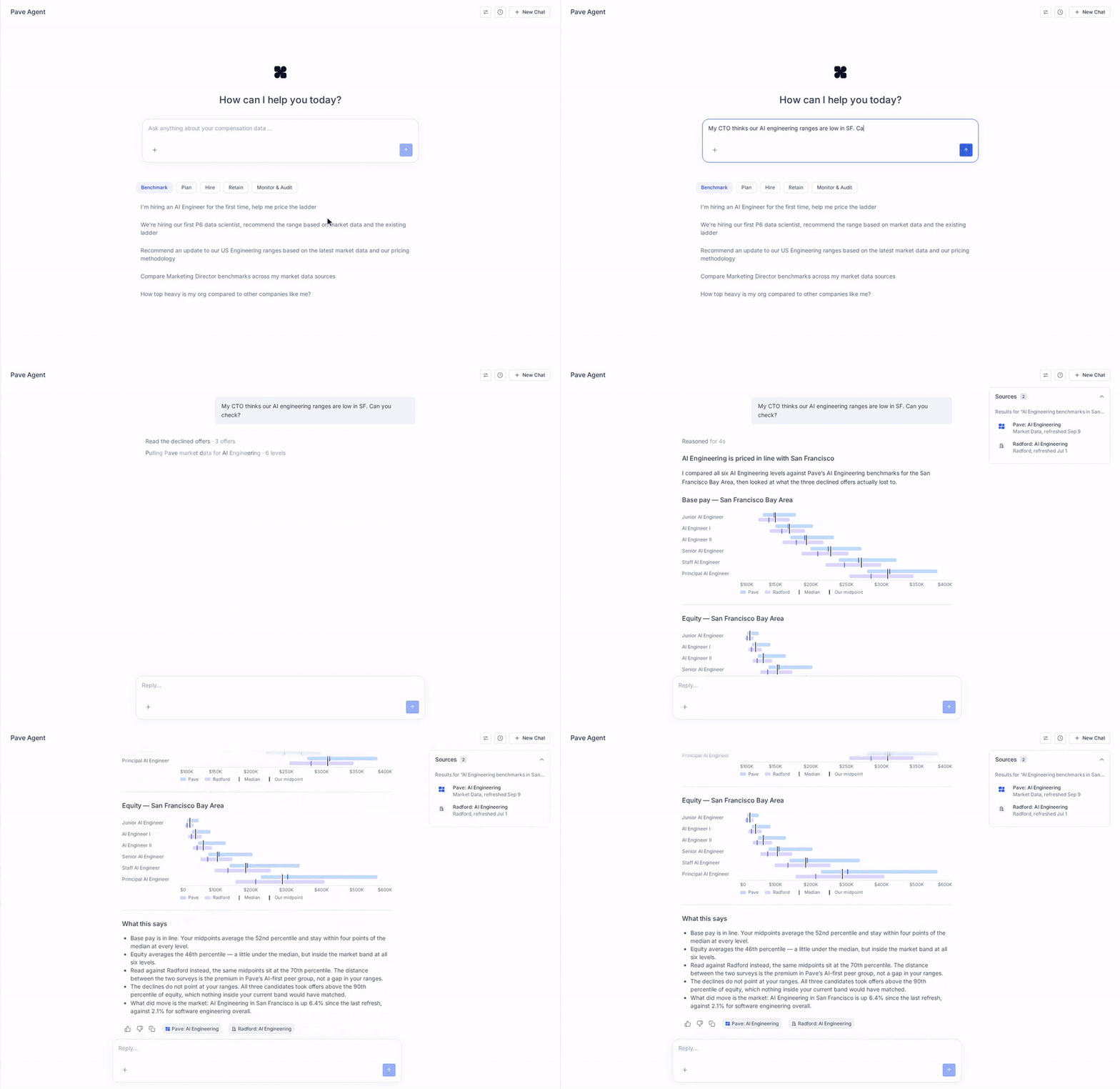
This is a common scenario: the CTO reports that engineering believes AI compensation ranges are low in San Francisco and asks you to review them.
A thorough response requires several days: gathering market data, comparing it to your bands, analyzing lost offers, and determining a solution. However, the CTO expects an answer by the end of the day.
At Total Rewards Live, Pave Founder & CEO Matt Schulman demonstrated how Pave Agent addresses this scenario. Pave Agent is an AI compensation analyst that uses your bands, people data, and Pave's market data. It begins with your actual compensation structure, not a generic template, and builds on your specific context.
It checks the claim before it agrees
Pave Agent relies on data, not assumptions. In the demo, base pay midpoints aligned with the market median at every level, and equity remained within the market range across all six levels.
It also examined factors not mentioned in the initial question, such as the three candidates who declined offers that quarter. None declined due to base pay; all gaps were in equity, with competing grants above the 90th percentile. Two candidates joined foundation model labs and one joined an AI infrastructure company. This aligns with findings from Pave and Nua Group in The State of AI Talent: base pay for AI talent is similar to the broader market, with premiums appearing in other compensation elements.
It shows what it compared you against
Each answer includes its sources and Pave Agent identifies the peer group used for benchmarking. In the demo, it selected the published Forbes AI list instead of the company's default group, explaining that this group is more focused on AI companies. A benchmark is only as reliable as its peer group, and unsupported figures are difficult to justify. If you prefer a different group, you can change it and request a new analysis.
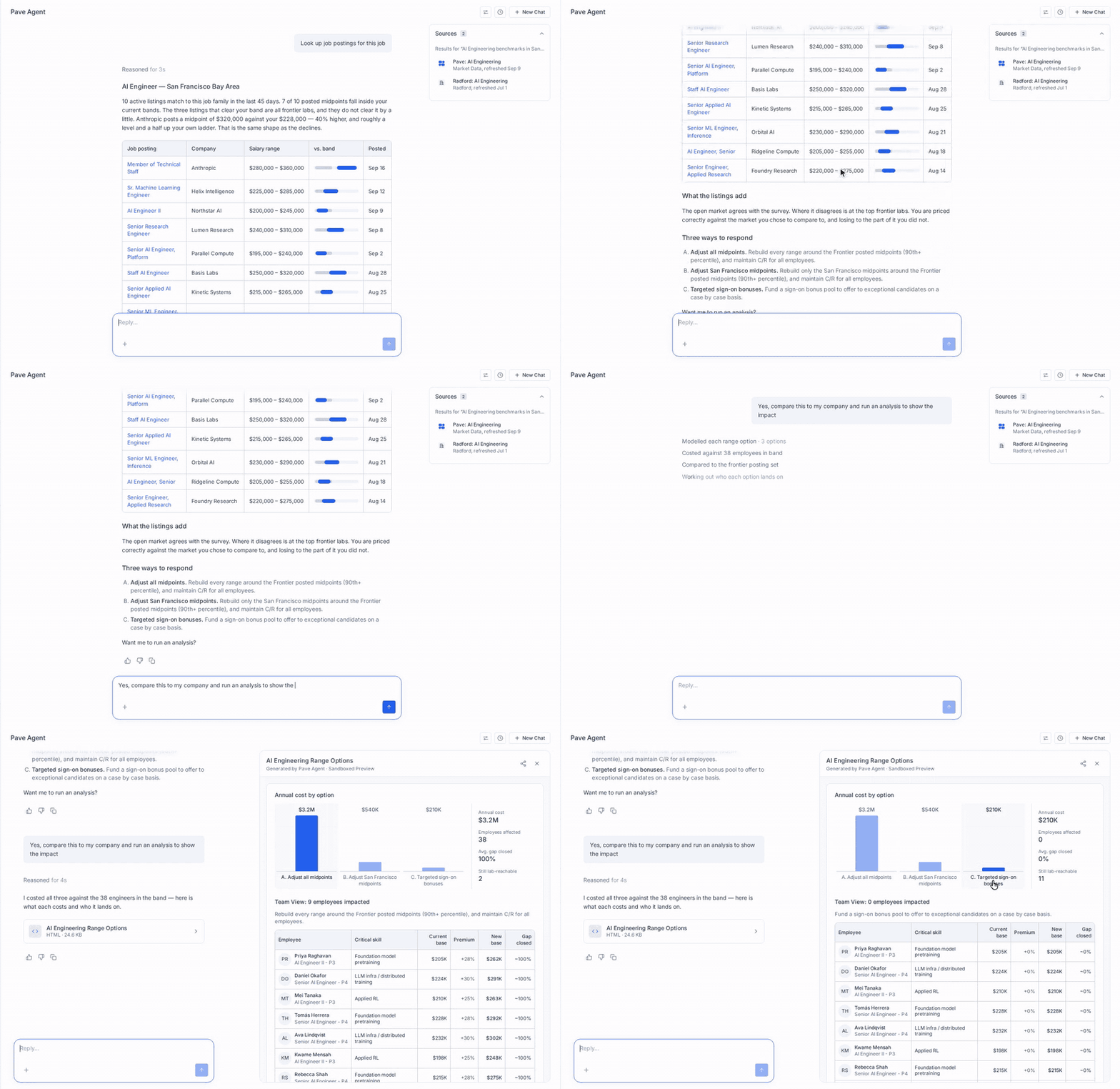
It then reviewed live job postings using the same compensation structure. Most roles were within the established bands, while a few, primarily at frontier labs, exceeded them by approximately one and a half levels. The conclusion: the company is competitively priced within its chosen market segment but is losing candidates to segments it does not benchmark against.
It prices the options and leaves the decision to you
From there, Pave Agent costed three ways to respond:
- Rebuild all compensation ranges around the frontier midpoints. This approach closes the gap for future offers but significantly increases payroll, as all engineers in the affected bands receive raises before new candidates.
- Rebuild only the San Francisco midpoints. This method prices for specific skills rather than levels, aligning with competing offers. In the demo, this option cost about one-sixth of the first.
- Establish a pool for targeted sign-on bonuses. This is the least expensive option, but it only benefits candidates with competing offers, and addressing exceptions individually can cause compensation bands to drift.
The dollar figures in the demo are illustrative.
Pave Agent does not select an option. Instead, it outlines the impact and trade-offs of each, leaving the decision to the person responsible for presenting it to the CTO. This approach ensures Pave Agent provides recommendations and transparency, while your team retains decision-making authority.
What sits underneath the analysis
Three factors enable this level of analysis, as Matt explained at TRL:
- Centralized data: market data, compensation bands, employee data, and offers are all connected. Without this integration, the agent can only make assumptions.
- Aligned permissions: Pave Agent follows your access rules, so questions from outside the compensation team don't expose sensitive information.
- Compensation-focused design: Guardrails prevent fabricated data, keep calculations consistent, and tailor checks to compensation work. Our seven factors for evaluating AI agents provide a useful checklist when comparing tools.
From a week of analysis to a better conversation
The goal is not speed alone. The CTO discussion begins with a well-sourced answer, priced options, and a clear understanding of tradeoffs, allowing you to focus on judgment. According to our 2026 AI Maturity in Total Rewards research, only 15.2% of teams demonstrated measurable business impact from AI. Analytical questions like this, where value comes from informed judgment, are an ideal starting point.
If you are a Pave customer, submit your current compensation question to Pave Agent. If not, book a demo.

Charles is a member of Pave's marketing team, bringing nearly 20 years of experience in HR strategy and technology. Prior to Pave, he advised CHROs and other HR leaders at CEB (now Gartner's HR Practice), supported benefits research initiatives at Scoop Technologies, and, most recently, led SoFi's employee benefits business, SoFi at Work. A passionate advocate for talent innovation, Charles is known for championing data-driven HR solutions.