


Key Takeaways
- Without a structured compensation plan, organizations make reactive pay decisions that create confusion and erode trust across the executive team.
- Anecdotal benchmarking and outdated surveys lead to costly errors—equity awards vary at different percentiles, making real-time data essential.
- Stock option mistakes cost executives hundreds of thousands: options expire worthless, the 83(b) election deadline gets missed, and vesting schedules are evolving rapidly.
- Tax oversights on RSUs and deferred compensation create substantial financial burdens—under-withholding can leave executives with six-figure surprise tax bills.
Executive compensation errors cost organizations millions in overpayments while eroding trust between boards, executives, and shareholders.
These mistakes often stem from outdated benchmarking data, misaligned performance metrics, or tax oversights that slip through review cycles—creating retention challenges and compliance risks that could have been avoided.
The most common issues? Setting base salaries without market justification, rewarding short-term gains over sustainable growth, letting stock options expire worthless, and under-withholding on equity compensation.
Organizations can address these challenges by conducting regular market comparisons, implementing automated compliance checking, and analyzing whether pay truly links to performance.
The right approach combines strategic planning with real-time market data to create competitive packages that attract top talent while protecting shareholder value.
Not Having a Clear Compensation Plan
A clear compensation plan serves as your roadmap for C-suite pay decisions. Without structured guidelines, organizations often make reactive choices instead of strategic ones during negotiations or retention discussions.
This lack of structure can create confusion across the executive team and lead to inconsistent compensation decisions that erode trust.
Why strategy matters for C-suite pay
Just as you approach business strategy with intentionality, executive compensation deserves the same rigor. A well-designed strategy aligns pay with company goals and performance metrics while creating incentives that drive the right behaviors.
Companies with clear compensation strategies typically see stronger retention among their executive teams compared to those making ad-hoc decisions.
Your strategy should define base salary ranges, bonus structures, and equity allocations based on role, experience, and market conditions. This framework helps maintain consistency across the C-suite while allowing flexibility for exceptional performers.
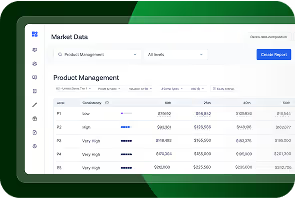
Real-time benchmarking tools like Pave can help build strategies grounded in actual market data from thousands of companies, with AI job matching ensuring you're comparing truly similar roles across organizations.
Impact on your executive team
When compensation lacks structure, it can create confusion across your executive team.
One VP might discover they're earning significantly less than a peer hired six months later, or another might receive equity grants with unclear vesting terms. These inconsistencies can erode trust more quickly than organizations realize.
Executive networks are well-connected, and compensation transparency continues to increase. A clear plan prevents these issues by establishing transparent criteria for pay decisions and ensuring everyone understands how their compensation package was determined.
Using Wrong Compensation Data Sources
Relying on incorrect or outdated compensation data ranks among the most damaging mistakes companies make. Bad data leads to problematic decisions - whether that's overpaying for average talent or losing top performers to competitors.
The wrong benchmarks can throw off your entire compensation structure for years. Modern platforms that connect directly to Human Capital Management (HCM) systems pull actual pay data rather than relying on self-reported surveys, providing the accuracy needed for critical compensation decisions.
Problems with anecdotal benchmarking
"My golf buddy told me his CFO makes $500K."
Informal conversations like this don't constitute a compensation strategy. Yet many boards still rely on anecdotal evidence when setting executive compensation.
This approach creates significant blind spots—that colleague's company might be twice your size, in a different industry, or located in a market with completely different talent dynamics.
Anecdotal benchmarking also suffers from selection bias. People tend to share success stories rather than average outcomes, which skews perception upward and can lead to overpayment.
These informal sources rarely account for the full compensation package, missing crucial details about equity, benefits, and deferred compensation that could represent 60% or more of total pay.
Finding reliable market data
Quality compensation data comes from verified sources that aggregate information from hundreds or thousands of companies in real time. This ensures you're benchmarking against current market conditions rather than outdated information.
Look for data sources that match companies by size, industry, location, and growth stage. An early-stage biotech company shouldn't benchmark against a mature private equity-backed manufacturing firm.
The most effective platforms use AI to match job descriptions and responsibilities, not just titles, since a "VP of Engineering" at a 50-person startup has vastly different responsibilities than one at a 5,000-person enterprise. Understanding how compensation varies across different elements matters too.
Research from Pave and Newfront's Total Rewards Report shows that while cash compensation (base plus variable pay) remains relatively consistent and evenly distributed around market benchmarks, equity award values vary dramatically.
Common Stock Option Mistakes
Stock options remain a cornerstone of executive compensation, yet companies routinely struggle with their implementation.
These missteps can cost executives hundreds of thousands in lost value while creating unnecessary tax burdens and compliance headaches. Understanding the nuances of equity compensation prevents these expensive errors.
Creating a culture where financial planning discussions are normalized encourages executives to seek guidance before costly mistakes occur.
Letting options expire worthless
Options expiring without being exercised represent a significant loss for executives.
Research from Pave's State of Equity Compensation report reveals troubling trends: companies are tightening equity eligibility year-over-year, with participation declining 5-10% across most job families. This makes it even more critical to help executives maximize the value of the equity they do receive.
Missing the 83(b) election deadline
The 83(b) election deadline is unforgiving: 30 days from the grant date. Miss it, and your executives could face substantial tax bills on restricted stock awards (RSAs) as they vest.
Instead of paying taxes on the grant date value, they'll owe taxes on the appreciation—potentially turning a manageable tax obligation into a significant financial burden.
Smart companies build 83(b) elections into their onboarding process for executives receiving RSAs. They don't just mention it in passing; they make it a required step with legal counsel involvement.
Some even require proof of filing before considering the grant process complete. The cost of missing this deadline far exceeds any administrative burden of proper tracking.
Not understanding strike price timing
Strike price timing significantly impacts the value executives receive from their options.
Grant options when the stock price peaks, and you've essentially provided them with limited upside. Time it strategically, and those same options could deliver substantial value. Yet many companies treat option grants as administrative tasks rather than strategic compensation decisions.
The key is aligning grant timing with your company's natural valuation cycles. For private companies, this might mean granting options shortly after a 409A valuation when you have the most defensible strike price.
Understanding current vesting practices also matters—according to Pave's research, while 92% of private companies still use 4-year vesting schedules, only 38% of public companies do.
Tax Considerations You Cannot Ignore
Tax implications can transform a generous compensation package into a financial challenge for both companies and executives. These tax considerations affect everything from cash flow to retention, yet many organizations treat them as afterthoughts.
Getting the tax piece wrong undermines even the best-designed compensation plans. Companies that enforce proper withholding ranges avoid many of these costly tax mistakes.
Under-withholding on RSAs and RSUs
Under-withholding on restricted stock creates immediate problems for executives and long-term headaches for companies. When RSUs vest, the IRS treats them as ordinary income, requiring withholding at supplemental wage rates that can reach 37% federal plus state taxes.
Companies that withhold at lower rates leave executives scrambling to cover massive tax bills come April.
The standard 22% federal withholding rate often falls short for highly compensated executives. A C-suite executive receiving $1 million in vested RSUs might owe $370,000 in federal taxes but only have $220,000 withheld.
That $150,000 gap becomes their problem, potentially forcing them to sell additional shares at inopportune times. Progressive companies now offer supplemental withholding elections, letting executives choose higher withholding rates upfront.
Deferred compensation tax timing
Deferred compensation requires careful planning around tax timing rules.
Make the wrong election under Section 409A, and your executives face immediate taxation plus a 20% penalty on amounts that should have been deferred for years. These rules are so complex that even experienced executives struggle to optimize their deferral strategies.
The key is planning deferral elections well in advance and sticking to them. Initial deferral elections must happen before the year in which comp is earned, and subsequent changes face strict limitations.
Companies using comprehensive compensation management systems can model different deferral scenarios and their tax impacts over time. This helps executives understand not just current tax savings but also future tax obligations when deferred amounts eventually pay out.
Build a Smarter Approach to Executive Compensation
Executive compensation mistakes drain resources through overpayments, turnover, and compliance issues—and erode trust between boards, executives, and shareholders in the process. The good news? These errors are preventable when organizations combine strategic planning with data-driven decision-making.
The most successful companies share three critical practices: benchmarking against current market data rather than outdated surveys, planning proactively instead of reacting to retention crises, and understanding how base salary, equity, and tax considerations work together.
By implementing systematic review processes, leveraging real-time benchmarking, and carefully structuring equity and deferred compensation, you can create packages that attract top talent while protecting shareholder value.
Modern compensation platforms like Pave connect directly to HCM systems and provide AI-powered analysis, helping you avoid common pitfalls before they become costly problems.
The stakes are too high to rely on guesswork. Success in executive compensation requires continuous monitoring, data-driven adjustment, and transparency in every decision.
Ready to elevate your executive compensation strategy? Join thousands of compensation professionals in Pave Data Lab, where you can access exclusive benchmarking insights, connect with peers navigating similar challenges, and stay ahead of compensation trends.
Request a demo to see how Pave's real-time market data and AI-powered planning tools can help you make confident, defensible compensation decisions.

Pave is a world-class team committed to unlocking a labor market built on trust. Our mission is to build confidence in every compensation decision.
Frequently Asked Questions (FAQ)
What are common problems with executive compensation?
Executive compensation faces several critical challenges: pay disparities between executives and employees that create workplace tension, a lack of real-time benchmarking data leading to over- or underpayment, and excessive reliance on stock-based incentives that may encourage risky short-term decision-making. Companies also struggle with complex tax implications and often fail to align executive incentives with long-term performance outcomes.
What is a typical salary for executives?
CEOs of $500 million revenue companies typically earn $1 million to $3 million in total cash compensation (base plus bonus), with equity potentially adding significant value. Total compensation varies based on industry—technology and finance pay higher—company growth stage, and whether the company is public or private. Base salaries generally range from several hundred thousand to over $1 million.
What is a typical executive compensation package?
Executive compensation packages typically include base salary (30% of total), performance bonuses (20%), equity like stock options and RSUs (40%), and benefits (10%). The equity component often represents the largest portion for senior executives, aligning long-term incentives with company success. Additional elements may include enhanced insurance, supplemental retirement plans, and lifestyle benefits, varying by company size and industry.
.avif)
.avif)