.avif)
Key takeaways:
- Furloughs are temporary, and layoffs are permanent, with furloughs maintaining the employment relationship and layoffs ending it entirely.
- Furloughs help companies retain talent and reduce future rehiring costs during short-term financial disruptions.
- Choosing between a furlough and a layoff should be driven by how temporary the business challenge is, not just short-term cost savings.
When business slows down, companies often face a tough workforce decision: lay off or furlough employees? The choice between a furlough and a layoff can make a significant difference for both employers and employees.
A furlough is a temporary, unpaid leave of absence or reduction in hours, while a layoff means termination of employment. Both options have their own financial repercussions, legalities, and effects on employee morale and loyalty.
Business leaders often choose furloughs over layoffs to keep trained staff, avoid rehiring costs, and maintain team morale during short-term financial challenges. Companies save on recruitment and training when the business recovers, while employees keep their benefits and have a clear path back to work.
Understanding employment laws becomes essential when making these decisions, as different rules apply to furloughs and layoffs regarding benefits, unemployment eligibility, and recall rights. The financial impact extends beyond immediate cost savings—companies that choose furloughs often see stronger employee loyalty and reduced turnover rates during difficult times.
What Is a Furlough and How Does It Work?
A furlough is a temporary, unpaid leave of absence or reduction in hours that keeps workers connected to their employer. Think of it as hitting pause on work while maintaining the employment relationship. During a furlough period, companies reduce labor costs without permanently losing valuable team members.
This strategy gained widespread attention during COVID-19 when businesses needed quick ways to cut costs while hoping for a rapid recovery. Unlike permanent separations, furloughs signal to employees that their roles will return when conditions improve.
Unpaid Leave of Absence Explained
An unpaid leave of absence during a furlough means workers stop receiving regular paychecks but stay officially employed. The employment relationship continues even though the work and pay temporarily stop.
This arrangement benefits both parties strategically:
- For employees: Maintain employment status and often keep access to group health benefits
- For employers: Avoid the administrative burden and costs of offboarding and later rehiring staff
- For both: Preserve institutional knowledge and team dynamics during uncertain times
Reduction in Hours for Workforce Management
Sometimes a furlough takes the form of reduced work hours rather than complete time off. A 40-hour work week might drop to 20 hours, or employees may work three days instead of five. This partial furlough approach helps companies manage costs while keeping operations running at reduced capacity.
This reduction in hours strategy works well for businesses that can't afford to shut down completely but need to trim expenses. Employees may still qualify for partial unemployment benefits to supplement their reduced income, depending on state regulations.
Terms of a Furlough Period
Furlough duration varies widely based on company needs and state laws. Some last just a few weeks, while others stretch for months. Clear communication about expected duration, benefit continuation, and recall procedures helps manage expectations.
Most employers provide written notice outlining specific terms: start dates, anticipated end dates if known, and what happens to benefits during the furlough.
What Is a Layoff?
A layoff represents the termination of employment, typically due to business reasons rather than individual performance. Unlike a furlough, a layoff cuts the employment relationship completely, removing workers from the company payroll and benefits.
When companies lay off employees, they're making a permanent decision about their workforce. Laid-off employees no longer work for the company and must find new jobs. While some layoffs get labeled as "temporary," the reality is that most workers who are laid off never return to their previous positions.
Permanent vs. Temporary Layoffs
While some employers use the term "temporary layoffs," these situations often blur the line between furloughs and true layoffs. A temporary layoff suggests workers might get recalled, but without guarantees or specific timelines, it functions more like a permanent separation.
Permanent layoffs offer clarity. Workers know they need new jobs and can pursue opportunities without wondering about recall possibilities. This certainty, though painful initially, often proves healthier for everyone involved.
Reduction in Force Situations
A reduction in force (RIF) represents strategic downsizing where companies eliminate positions rather than just people. The jobs themselves disappear from the organizational chart.
RIF situations often trigger specific legal requirements. Mass layoffs involving significant portions of the workforce may require advance notification under the Worker Adjustment and Retraining Notification (WARN) Act. Companies must follow careful procedures to avoid discrimination claims and ensure fair selection processes.
Key Differences Between Furloughs and Layoffs
Understanding the differences between furloughs and layoffs helps both employers and workers make informed decisions. The distinction affects everything from unemployment eligibility to benefit continuation and future employment prospects.
Healthcare and Group Health Benefits
One major advantage of furloughs involves benefit continuation. Furloughed employees may continue receiving health benefits, though companies might ask workers to cover larger portions of premiums. This continued coverage provides crucial protection during uncertain times without triggering COBRA requirements.
Layoffs immediately end employer-sponsored benefits. Workers must elect COBRA coverage at their own expense or find alternative insurance. The Consolidated Omnibus Budget Reconciliation Act requires companies to offer continued coverage, but at rates that many unemployed workers struggle to afford.
COBRA and Benefit Continuation
COBRA requirements differ significantly between furloughs and layoffs:
- Layoffs: Immediately qualify for COBRA continuation coverage
- Furloughs: Might not trigger COBRA if employer continues providing health benefits during leave
- Extended furloughs: COBRA obligations begin if coverage ends or furlough extends beyond plan's specified period
Employers must track these timelines carefully to ensure proper notifications and avoid compliance issues.
Unemployment Benefits for Furloughed vs. Laid-Off Employees
Both furloughed and laid-off workers usually qualify for unemployment benefits, though the application process and benefit amounts may differ. Understanding these distinctions helps workers maximize their support during work interruptions.
Eligibility basics:
- Laid-off employees: Typically qualify immediately for unemployment benefits because the employment relationship has ended.
- Furloughed employees: Generally eligible for unemployment in most states, even though they remain employed, because they are not receiving wages during the furlough.
- Partial furloughs: Often qualify for partial unemployment benefits to offset lost wages, depending on state income thresholds.
Furloughed employees should file for unemployment as soon as the furlough begins, as most states process furlough claims similarly to layoffs for benefit purposes.
Rules for Exempt and Non-Exempt Employees
The Fair Labor Standards Act creates different rules for exempt and non-exempt employees during furloughs and layoffs. These distinctions affect how companies can implement workforce reductions while maintaining legal compliance.
Fair Labor Standards Act Requirements
For exempt employees, even answering one work email or joining a brief call triggers the requirement to pay their full weekly salary. This all-or-nothing approach means companies can't simply reduce exempt employees' hours and pay proportionally.
Non-exempt employees have more flexibility since their pay directly ties to hours worked. Companies can reduce their hours from 40 to 20 per week, and pay decreases proportionally.
Salaried Employees and Full Salary Rules
Salaried employees can't have their pay docked for partial-week furloughs without risking their exempt status. Companies often implement week-long furloughs for exempt workers to avoid these complications.
By ensuring no work occurs during designated furlough weeks, employers can suspend salary payments without violating wage laws or jeopardizing exemption status.
Hourly Workers and Schedule Changes
Non-exempt employees offer more flexibility during workforce adjustments. Hourly workers might rotate through furlough periods, with different teams taking unpaid time off on alternating weeks. This approach maintains some operational capacity while reducing overall labor costs.
Workers can often collect unemployment benefits for the hours they've lost, providing partial income replacement during reduced schedules.
Legal Requirements and Notification Rules
Federal and state laws establish specific requirements for notifying employees about furloughs and layoffs. These regulations protect workers' rights while ensuring they have adequate time to prepare for employment changes.
Worker Adjustment and Retraining Notification (WARN) Act
The WARN Act requires 60 days' advance notice for mass layoffs or plant closures affecting 50 or more employees. This federal law gives workers time to seek new employment or retraining before losing their income.
Furloughs lasting less than six months typically don't trigger WARN requirements. But if a temporary furlough extends beyond six months or becomes permanent, retroactive WARN obligations might apply. Companies must carefully track furlough durations to maintain compliance.
How to Decide: Furlough or Layoff?
Choosing between furloughs and layoffs requires careful analysis of your business situation, financial projections, and workforce needs. The right decision depends on whether your challenges are temporary or permanent.
Assessing Your Workforce Needs
Start by evaluating the root cause of your financial pressure:
- Seasonal slowdowns or temporary market disruptions → Consider furloughs
- Permanent changes in business model or industry → Typically require layoffs
- Short-term cash flow issues → Furloughs preserve talent for recovery
- Structural transformation → Layoffs allow you to restructure capabilities
Evaluate which roles remain essential for maintaining operations during downturns. This analysis helps determine whether furloughs or layoffs make sense for different departments.
Financial Impact Analysis
Calculate the true costs of each option beyond immediate payroll savings:
Furlough costs:
- Continued benefit expenses
- Potential partial salary or PTO usage
- Administrative overhead for maintaining employment records
According to our recent total rewards report, most organizations spend about $14,000 to $17,000 on medical insurance per employee per year—a cost that will continue even when your team isn’t operating at full capacity.
Layoff costs:
- Severance payments
- Unemployment insurance increases
- Eventual recruitment and training expenses when hiring resumes
- Lost institutional knowledge
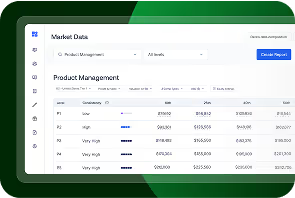
When hiring picks up again, expect to spend a significant amount to bring on new employees. We analyzed our real-time dataset and found that the average cost to hire an employee, including pay and benefits, is between $200k and $270k.
Want more compensation insights? Join Pave Data Lab—a community of verified HR, compensation, and total rewards leaders—to get answers to your most pressing pay, equity, and benefit questions.
Long-Term vs. Short-Term Solutions
When furloughs make sense:
- Expected recovery within 3-6 months
- Need to maintain workforce continuity
- Want to preserve institutional knowledge and team dynamics
- Industry peers are facing similar temporary challenges
When layoffs are appropriate:
- Permanent or long-term changes in the business model
- Need to restructure roles and capabilities
- Extended uncertainty about the recovery timeline
- Stringing workers along with indefinite furloughs damages morale
Make Informed Pay Decisions
The choice between a furlough and a layoff shapes your company's future success and your employees' lives. Furloughs work best for temporary challenges when you'll need your team back soon, while layoffs make sense for permanent changes in your business model.
The decision impacts not just immediate costs but also long-term factors like employee morale, recruitment expenses, and competitive positioning when recovery comes.

Pave is a world-class team committed to unlocking a labor market built on trust. Our mission is to build confidence in every compensation decision.
Is furlough considered termination?
Furlough is not classified as termination since employees remain on payroll with an expectation to return to work. However, California's Division of Labor Standards Enforcement (DLSE) requires treating furloughs exceeding 10 days or the next pay period as termination for final pay requirements. The employment relationship technically continues during furlough, preserving benefits and seniority, which has implications for benefits administration and HRIS tracking.
What are the disadvantages of furlough?
Furloughs create significant operational uncertainty—your organization continues paying for employee benefits without receiving productivity in return, creating cash flow challenges. The temporary nature doesn't guarantee retention, as uncertain employees may seek stable employment elsewhere, potentially losing your top talent when operations resume. Additionally, state-specific regulations affect whether employees qualify for unemployment benefits, complicating your workforce planning.
Do you still get paid if you're furloughed?
No, furloughed employees generally do not receive pay during the furlough period, as it's a temporary, non-duty, non-pay status. However, federal government employers must provide back pay once shutdowns end under the Government Employee Fair Treatment Act. Private sector organizations set their own furlough policies, though many continue benefits like health insurance even while suspending pay.
Do you get severance if furloughed?
Severance is typically not offered during furloughs since the employment relationship continues and no termination has occurred. If employees resign during a furlough, organizations generally don't provide severance as it's considered voluntary separation. Clear compensation policies and total rewards communication during workforce transitions help manage expectations around severance eligibility.