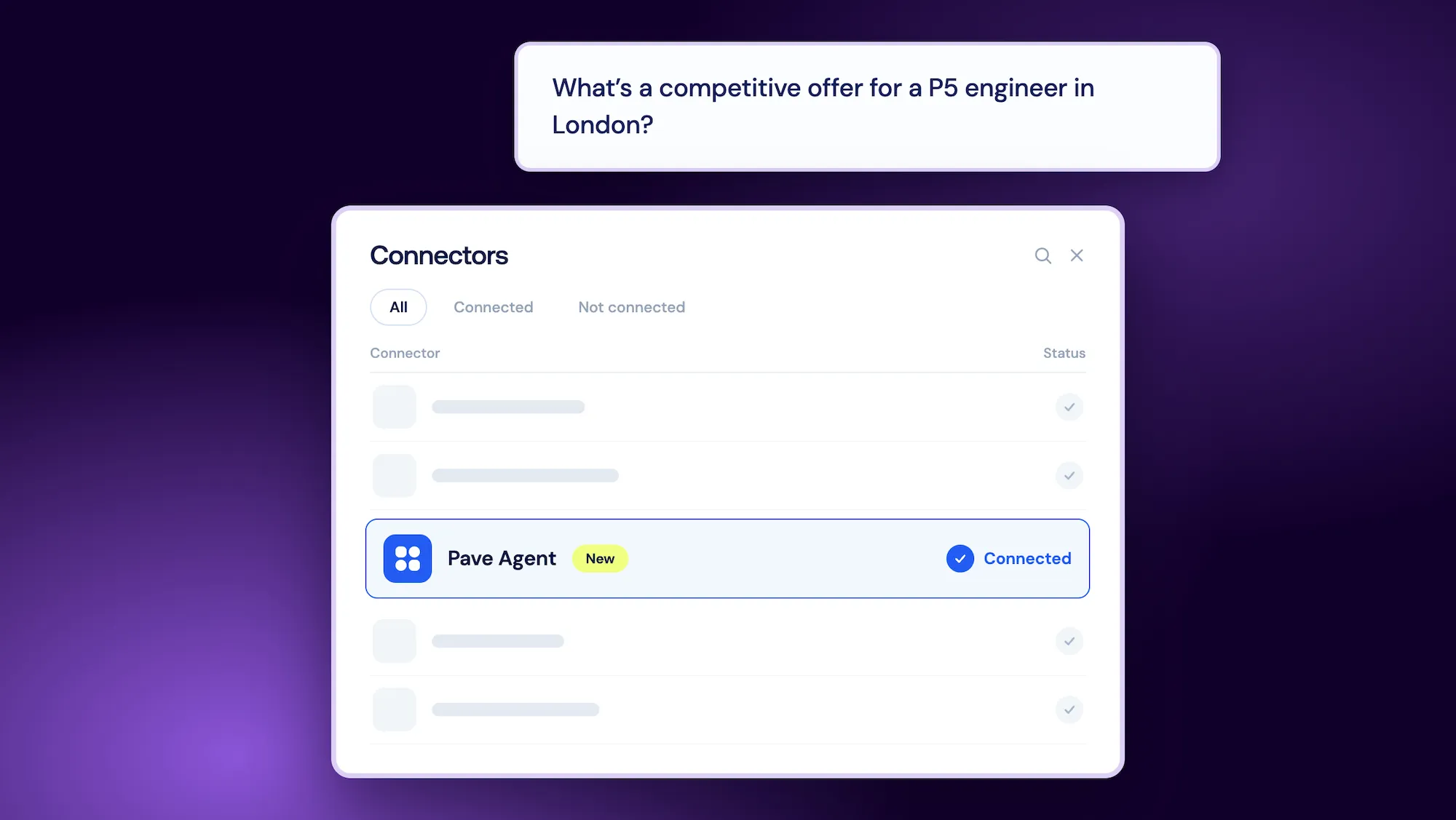
Until now, there's been exactly one place to talk to The Pave Agent: inside Pave. That's changing.
MCP (Model Context Protocol) is the open standard that AI clients use to connect to external tools and data. Instead of every platform building a custom integration for every AI assistant, a tool implements MCP once and any MCP-compatible client can use it. It's quickly becoming the common language AI platforms use to talk to each other, and it's how tools like Claude connect to the systems people already work in.
The Pave Agent now speaks it too. That means the same compensation analysis you'd get inside Pave—grounded in your data, sourced, and explainable—is reachable from the AI tools you're already using, starting with Claude.
When to use the MCP vs using Pave
Pave is still the best place for deep compensation work: building a merit cycle, reviewing pay bands across an org, working through a rewards strategy. The full workflow, the underlying data model, and the rest of the platform live there for a reason.
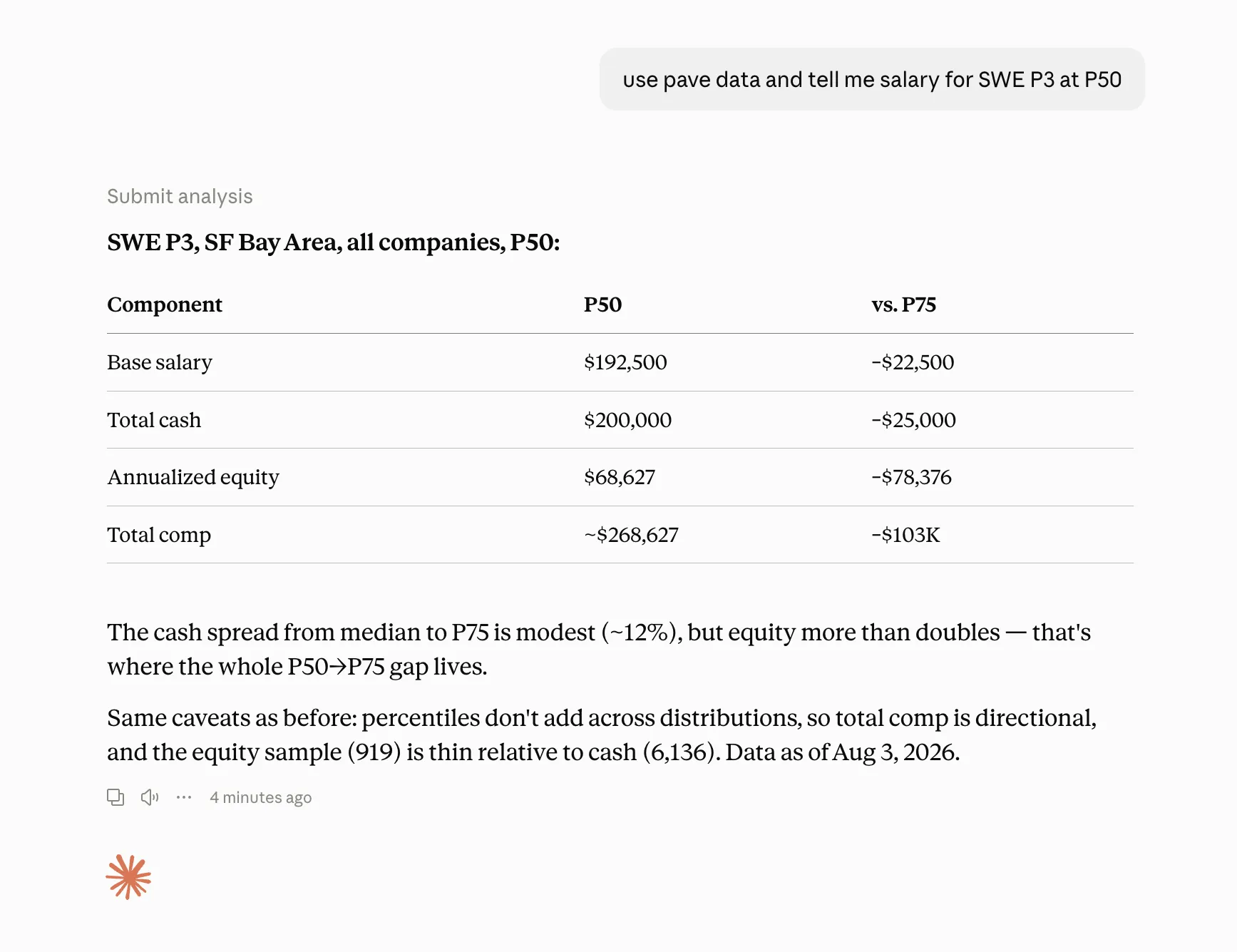
MCP is for the moment in between. Say you're in Claude working through something else entirely—drafting a role scorecard, prepping notes for a hiring manager, drafting a communication about this year’s merit cycle—and a compensation question comes up mid-task. Instead of switching tabs, opening Pave, and starting a new conversation, you ask right where you are and get a defensible answer without breaking your flow.
What's next for the MCP
This first version connects The Pave Agent to Claude. Support for even more MCP-compatible tools is on the way.

Charles is a member of Pave's marketing team, bringing nearly 20 years of experience in HR strategy and technology. Prior to Pave, he advised CHROs and other HR leaders at CEB (now Gartner's HR Practice), supported benefits research initiatives at Scoop Technologies, and, most recently, led SoFi's employee benefits business, SoFi at Work. A passionate advocate for talent innovation, Charles is known for championing data-driven HR solutions.