
Today McKinsey published "Fit for the race: The anatomy of an AI-native organization," a new research article built on Pave's real-time compensation and workforce data. Our Insights team has worked with McKinsey's researchers to build the analysis behind it.
The research set out to answer one question: if AI changes how work gets done, what does an organization built around AI from day one look like? We’re still early in the wave of AI transformation, but the AI-native companies, which put AI at the center of their products and operations from the start, offer an early look at the changes we could expect in the workforce. We partnered with McKinsey to measure how these companies are structured compared with the rest of technology and non-technology/cross-sector peers.
How the partnership worked
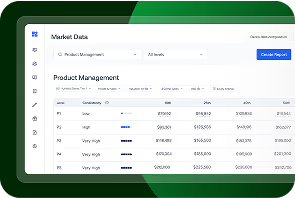
Pave's data science team analyzed our full dataset of more than 3.9 million employee records across 11,000 companies, drawn directly from HRIS and equity management systems. We generated aggregated, anonymized metrics on function mix, job level distribution, spans of control and role composition, and shared those metrics with McKinsey.
The three analysis groups
The research compares companies with at least 150 employees across three cohorts:
- AI-native companies: 36 organizations drawn from established lists such as the Forbes AI 50 and CNBC Disruptor 50, averaging about 1,100 employees. Example companies include Applied Intuition, Decagon, Harvey, Legora, Lovable, Mistral AI, OpenAI, Perplexity, Replit and Sierra.
- Technology companies: 1,293 technology companies outside the AI-native group, averaging about 900 employees. Example companies include Atlassian, Block, Coinbase, Dropbox, Electronic Arts, Okta, Ramp, ServiceNow, Stripe and Zoom.
- Cross-sector companies: 404 established non-technology companies across about ten industries, averaging about 600 employees. Example companies include Cotopaxi, CSL Behring, Dutch Bros, e.l.f. Beauty, McDonald's, On Running, Sarku Japan, SharkNinja, Sweetgreen and The Farmer's Dog.
What the data shows
McKinsey's article identifies four "structural signatures" of AI-native organizations. The findings that stood out most to us:
- Fewer managers, wider spans: Managers make up 14% of the AI-native workforce, versus 17-23% in the comparison groups, and each manages one to two more direct reports on average.
- A senior-heavy IC base: More than half of individual contributors at AI natives are senior ICs, about 1.5 times the share at technology and cross-sector peers.
- Engineering is the core: Engineering is roughly half the AI-native workforce, versus 34% at tech peers and 26% at cross-sector companies.
- Focus on sellers while support runs leaner: Sales is about 20% of the workforce, similar to tech peers, and account executives are 37% of sales roles versus 23-29% at peers. Customer support is just 3% of the workforce, versus 7-8% at peers.
Read the full research
Read "Fit for the race: The anatomy of an AI-native organization" on McKinsey.com. To see how your own organization's structure and pay compare, visit the article.
Thank you to Tom Welchman, Alexis Krivkovich, Marie Bäckström Twallin, Pawel Poplawski and the rest of the McKinsey team for the partnership.

Rithika is a data scientist at Pave focused on compensation insights, analytics, data-storytelling, and community. Before Pave, she worked at Karat Financial building a credit card product and launching a personal finance tool for content creators.