


According to a new survey of 251 companies conducted by Pave and Alpine Rewards, most technology companies are ready and willing to pay a premium for AI talent, but few are building robust systems to track and manage how AI talent is paid over the long run.
Here's how we know technology companies are willing to pay more for AI talent when needed: Among technology participants in the survey, which was conducted in September and October 2026, 56% now set different pay targets (for cash, equity, or both) for roles requiring AI expertise. Across all industries, the figure is only 37%, and in life sciences for example, it's just 11%.
However, when I look at the mechanics behind those decisions, I see benchmarks that point at the wrong peer groups, ad hoc offers negotiated one at a time, and programs designed to land AI talent without much forethought on how to retain AI talent for years to come. Yes, companies are hiring AI talent fast to execute their business strategies, but that should not come at the expense of building well-structured compensation programs that will pay dividends in the long run.
Here are five warning signs in the data to avoid at your company.
1. Don't benchmark pay against the wrong market
In the survey, 54% of technology companies currently benchmark AI roles against their standard peer group. Only 22% use a dedicated AI-focused peer group. This is a problem.
Take a step back and think about who else your top AI candidates are talking to. It's probably not the five mid-cap SaaS companies in your compensation committee's peer group. Rather, candidates are talking to AI labs, hyperscalers, and well-funded startups that set pay using a different playbook. If those companies aren't in your dataset, your offers will miss the mark.
Worse yet, another 7% of technology companies say they price AI roles mainly based on candidate expectations. It’s never a good idea to let candidate vibes set your pay strategy.
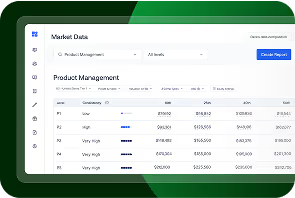
At Pave, we have 80% of the Forbes AI 50 in our real-time dataset and launched peer group functionality earlier this year. Benchmarking pay for both your standard peer group and top AI companies has never been easier, allowing you to see the full market and triangulate pay more effectively.
{{mid-cta}}
2. Don't define your AI premium one offer at a time
When we asked technology companies what tools they use to pay AI talent more, two of the most common answers point to tools that get decided one offer at a time: 37% use sign-on bonuses for AI hires, and 21% report frequent use of individual exceptions or out-of-range approvals.
Neither is a bad tool on its own, but sign-on bonuses are typically negotiated one candidate at a time, and an exception is, by definition, approved one at a time. When these practices become a standard way to pay an entire job family or function, it means your compensation strategy isn't doing what it was designed to do.
Overall, this is what compensation looks like when leaders are willing to pay a premium for top AI talent but haven't taken a step back to align on how to execute an AI compensation strategy consistently and at scale. This leaves recruiters and hiring managers to decide what happens at the point of each offer.
3. Don't let exceptions clash with your posted pay ranges
Ad hoc pay premiums used to stay hidden. That's no longer true.
80% of technology companies in our survey post salary ranges on every U.S. job, whether or not an individual state requires it, and 60% plan to conduct a formal pay equity analysis in 2027. Put those stats next to the 21% of technology companies that report frequent exceptions or out-of-range approvals for AI roles, and the risk is clear.
Every exception leaves a record and it shows up in your next pay equity assessment as a gap you can't explain easily. A premium you can defend is one that's built into your structure. A premium approved one exception at a time is much harder to explain.
4. Don't just pay to hire AI talent, pay to keep it
Look at where technology companies invest when it comes to hiring AI talent:
The pattern is clear. Beyond base pay, the tools tilt toward getting AI talent in the door. 43% of technology companies give AI hires larger new-hire equity grants, but only 28% give them larger refresh grants, and just 12% use targeted retention cash. Yes, your star AI research scientist might join with a large above-market grant, but as that grant vests, a refresh award built on your standard guideline likely won't hold up.
I hear the same story in the offices I visit in San Francisco and Silicon Valley: people bounce to the next lucrative offer as soon as the 1-year cliff hits. Companies trying to lure your talent away know exactly when those cliffs happen and are ready to pounce.
5. Don't battle for AI talent without a gameplan
44% of surveyed technology companies say they still don't set a different pay position for AI roles. Some of them may not need to yet, but they're competing for scarce talent against the 56% that already do. On balance, who do you think will win?
The infrastructure to win already exists in most cases. 68% of technology companies maintain separate, higher equity guidelines for technical and engineering roles. They've already accepted the principle that some talent costs more. They just haven't applied this thinking systematically to AI roles yet. In fairness, many companies are still thinking through their job architecture for AI roles, but it seems the time for delay has passed.
What happens without a deliberate approach is predictable. You lose candidates at the offer stage, or you win them with an exception (i.e., warning sign #2).
Importantly, where AI premiums matter most is narrower than the hype might suggest. We asked technology companies to rank roles by how aggressively they pay above market in cash (where 1 equals the highest premium). AI research scientists (1.5) and ML engineers (1.7) came out on top. General business roles where people use AI tools ranked last by a wide margin (3.1). The premium goes to people who build AI, not the people who use it. That makes the problem smaller and easier to scope than it sounds.
What a good AI pay strategy looks like
None of this calls for a new compensation philosophy, but it does require thinking about AI talent as its own segment with the same discipline you apply everywhere else.
- Benchmark against the right market. If you're serious about attracting top AI talent, it's time to build an AI-specific peer group or use AI-specific data cuts. This does not mean you need to pay like AI companies, but you should know what you're up against.
- It's time to build premiums into your structure. A year ago, most compensation professionals wanted to hold off on building separate job families, pay ranges, or premiums for AI talent. I think it is fair to say this moment has passed. The time has come to build consistent and scalable models for paying AI talent, which can mean new job families with specific pay ranges, or setting clear premiums on top of existing R&D job families and ranges.
- Fund retention, not just hiring. Right now, the race for top AI talent is front-loaded. Beyond base pay, most of the premium tools in use today are aimed at getting talent in the door, not at what happens in year two and beyond. It's time to think about AI-specific equity refresh programs and other retention measures.
- Assume exceptions will be seen. Every AI offer should hold up next to your posted ranges and your next pay equity analysis. If you can't explain differences easily, this is a sign that more structure is needed.
The companies that get this right won't necessarily pay the most. They'll know what they're paying for and why, and they'll keep the people they hired.

Alex is a Compensation Fellow at Pave. He has more than two decades of experience in total rewards, including 10 years working at Aon plc developing and growing the Radford Survey platform.
About the data
The 2027 Budgeting and Trends Survey was conducted by Pave and Alpine Rewards in September and October 2026, with 251 participating companies, 146 of them in technology. Technology figures on AI pay practices are based on 109 to 111 responses; questions on approaches and benchmarking allowed multiple answers. Role rankings are based on 55 technology responses and show which roles receive the largest premiums, not the size of those premiums.