

Retailers are hiring later and using more flexible staffing this holiday season. While this flexibility helps employers manage uncertainty, it can make workers' paychecks less predictable.
This unpredictability is likely an unintended consequence, not a goal. However, research on pay variability shows a cost: workers who rely on fluctuating pay are more likely to quit, which can make holiday staffing particularly difficult.
Holiday retail workforce trends for 2026
Holiday hiring is starting later and becoming more flexible. Employers are using automation to speed up hiring, and relying on gig workers and flexible scheduling to adjust staffing as demand changes, according to the Wall Street Journal. One e-commerce fulfillment provider that previously began staffing in September now hires temporary workers about two weeks before peak volume.
The volume outlook remains uncertain. The National Retail Federation projects 4.2% sales growth, up from 3.1% last year, but September consumer prices rose 3.7% year-over-year, indicating some growth may reflect higher prices. Amazon plans over 300,000 holiday hires, up from 250,000. DHL and GXO each plan about 25% more seasonal workers, while the U.S. Postal Service is reducing seasonal hires from 14,000 to about 10,000.
Retail is undergoing change. CNBC, citing Indeed, reports a 10% increase in seasonal postings from last year, driven mainly by non-retail jobs. Retail now accounts for 61% of seasonal roles, down from about 66% in 2019. Retailers are posting more permanent part-time jobs: in September 2026, seasonal roles made up 20% of holiday postings, while non-seasonal part-time roles increased from 38% to 49% of retail jobs.
Workers are seeking extra income. Indeed searches for seasonal and holiday work are up 28% from last year, and 16% of active job seekers already hold more than one job. Service workers, who often face inconsistent schedules, are most likely to hold another job.
What research says about pay that swings
A May 2026 study by Lindsey Cameron of the University of Pennsylvania and Jirs Meuris of the University of Wisconsin–Madison found that pay variability, or pay that changes from paycheck to paycheck within the same job, is linked to a higher likelihood of quitting. The authors interviewed ride-hail drivers and tested their model on 711 full-time truck drivers at one U.S. company using survey and HR records (study).
A one-standard-deviation increase in pay variability was associated with about a 13.6% higher probability of voluntary turnover. The effect varied by worker. It was stronger under three conditions:
- Frequent below-average paychecks: Workers whose paychecks often fell below their own average were more likely to leave. Occasional large paychecks did not offset the shortfalls.
- Little control over earnings: The effect was weaker for workers who earned more through performance incentives or had higher self-efficacy. Pay swings from factors outside workers' control, such as scheduling or assignments, are harder to manage.
- High paycheck dependence: The effect was stronger when households relied heavily on the worker's paycheck.
While the study focused on drivers, the lessons learned can still help retail industry HR teams finalize their seasonal and 2027 hiring plans.
Retail industry data: hours, jobs & wages
Bureau of Labor Statistics data show a shorter retail workweek, flat warehouse employment, and retail wage growth that has recently lagged behind inflation.
The decline of the retail workweek
The average retail workweek is about 30 hours. The annual average was 31.6 hours in 2012, 30.6 in 2019, and 29.9 in 2025, about 1.8 hours shorter than in 2012.
December typically runs 0.3 to 0.9 hours above the January-to-October average. September 2026 reached 30.7 hours, the highest since December 2021.
Flat staffing as warehouse demand rises
Warehousing and storage employment peaked at 1,939,300 in March 2022. By September 2026, it was 1,831,800, about 5.5% below the peak and 1.2% lower than a year earlier.
The Wall Street Journal reports that ShipMatrix expects 2.4 billion peak-season parcels, up from about 2.3 billion last year. That aligns with automation and flexible staffing absorbing more volume without adding permanent headcount.
Retail pay: from outpacing inflation to trailing it
Retail hourly earnings growth outpaced inflation by about 2.1 percentage points in November 2025 and again in January and February 2026. Since April, it has lagged CPI in five of six months and matched it in August. In September, retail earnings grew 2.80% while CPI rose 3.74%, resulting in a 0.94-point shortfall, the largest in the past 12 months.
Mid-season turnover: a growing concern
Seasonal turnover is expected, as most seasonal workers leave when the season ends. The greater risk is early departures, when workers leave with weeks remaining because their paychecks feel too unpredictable.
Many seasonal workers are filling an income gap, and some already have another job. If hours or schedules are less steady than promised, the study’s conditions apply: frequent shortfalls, little control over hours, and a household that depends on the income. Even a few weeks of added stability can prompt a move.
The cost comes at the worst time for retail HR teams. When a trained associate leaves in early December, they take valuable peak-season experience with them. Later hiring can make replacements harder to onboard, as some employers now hire only about two weeks before peak volume. Early exits add unplanned costs to the expected turnover.
Boosting retail retention during the holidays and into the New Year
While no silver bullet exists for seasonal hiring turnover, a few steps can reduce the unpredictability that drives early departures, even when hours must remain flexible. A few actions could help:
- Give workers a floor. Guaranteeing a minimum number of hours turns "I don't know what I'll make" into a known minimum. This addresses the below-average paychecks linked to the highest quit risk in the research.
- Post schedules early. Advance notice allows workers to plan for a second job, childcare, or bills, and gives them more control over their hours.
- Make shift swaps and extra shifts easy. When workers can choose to pick up hours, pay variability feels less imposed and more within their control.
- Be specific in offers. Clearly state the pay rate, expected hours range, and whether there is a path to a longer-term role.
- Ensure payroll accuracy. Errors hit hardest when a household depends on timely paychecks.
- Consider a completion incentive. A bonus for staying through the season gives workers a clear reason to remain through the final weeks.
- Make the permanent part-time path visible. For retailers converting seasonal roles to ongoing part-time jobs, show workers the next steps.
We’ve covered this in more depth in "Retail's Turnover Problem Has a Total Rewards Solution."
What retail HR should watch this season
Flexible holiday staffing can make pay less predictable, which research suggests is costly when workers depend on that income. Here are three key points for retail HR leaders to consider for peak season:
- Identify where your hiring and scheduling programs cause hours or pay to fluctuate, for both seasonal and permanent workers.
- Monitor for mid-season resignations, not just end-of-season departures.
- Find ways to give workers a minimum-hours guarantee, advance notice, and more control over their schedules.
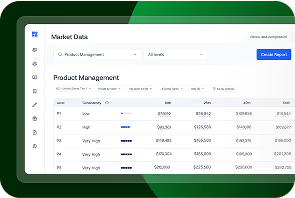
With Pave’s Market Data Pro, compensation teams can use real-time benchmarks to see where pay for store, warehouse, and fulfillment roles stands today and monitor how those trends move through the season.
Pave Agent, your AI compensation analyst, can help with planning. It recommends and shows its work, with data sources and confidence levels, so your team can price seasonal and part-time roles, model scenarios before peak, and make the final call.

Charles is a member of Pave's marketing team, bringing nearly 20 years of experience in HR strategy and technology. Prior to Pave, he advised CHROs and other HR leaders at CEB (now Gartner's HR Practice), supported benefits research initiatives at Scoop Technologies, and, most recently, led SoFi's employee benefits business, SoFi at Work. A passionate advocate for talent innovation, Charles is known for championing data-driven HR solutions.