Build, Buy, or Blend: A Compensation Leader’s Guide to Sourcing AI

Most compensation leaders recognize this scenario: an analyst uses a general-purpose AI tool, uploads last year’s merit file, and quickly produces a working model. This raises the question: why invest in a dedicated solution?
Compensation teams are increasingly adopting AI and developing strategic AI roadmaps. The key question is whether to build, buy, or blend AI solutions. According to a recent KPMG paper, 57% of organizations now prefer a blended approach, up from 51% the previous quarter. However, compensation isn’t a generic enterprise use case, and it brings unique considerations.
Why building AI tools feels easier than it is
Brian Elliott, writing in MIT Sloan Management Review, notes that HR faces a pivotal choice. Teams can let AI handle transactional tasks and risk becoming a compliance function, or they can evolve it into an “internal organizational effectiveness engine” that addresses problems and drives outcomes.
With rapid development tools, an analyst can create a merit calculator in a single afternoon. Advanced AI models are easily accessible, and boards are seeking AI-driven initiatives. However, building a prototype is only the beginning.
Research from MIT’s NANDA initiative found that AI tools from specialized vendors succeed about two-thirds of the time, compared to roughly one-third for internal builds. Gartner projects that over 40% of agentic AI projects will be canceled by the end of 2027. The risks are greater in compensation. Pay data is highly sensitive, and employees, regulators, or legal authorities may scrutinize any output.
Applying the framework for comp teams
Build AI tools
Build involves developing custom AI and managing its entire lifecycle. When executed effectively, this approach provides complete control and differentiation, but it also means full responsibility for the associated risks.
For the compensation function, it’s important to clarify what you would actually own. Market data and benchmarking engines operate at a scale beyond individual companies. Your true differentiators are the elements you add on top: your pay philosophy, leveling logic, and the judgment that defines your program.
Compensation leaders also know the common failure scenario. An expert builds a merit model in Excel, it becomes increasingly complex over time, and then the creator departs, taking critical knowledge with them. Rapidly developed AI workflows present similar risks, often faster (see our Vibe Coding article for details). A model that underprices a job family or misinterprets pay-equity signals isn't a minor issue. It poses significant legal and trust risks.
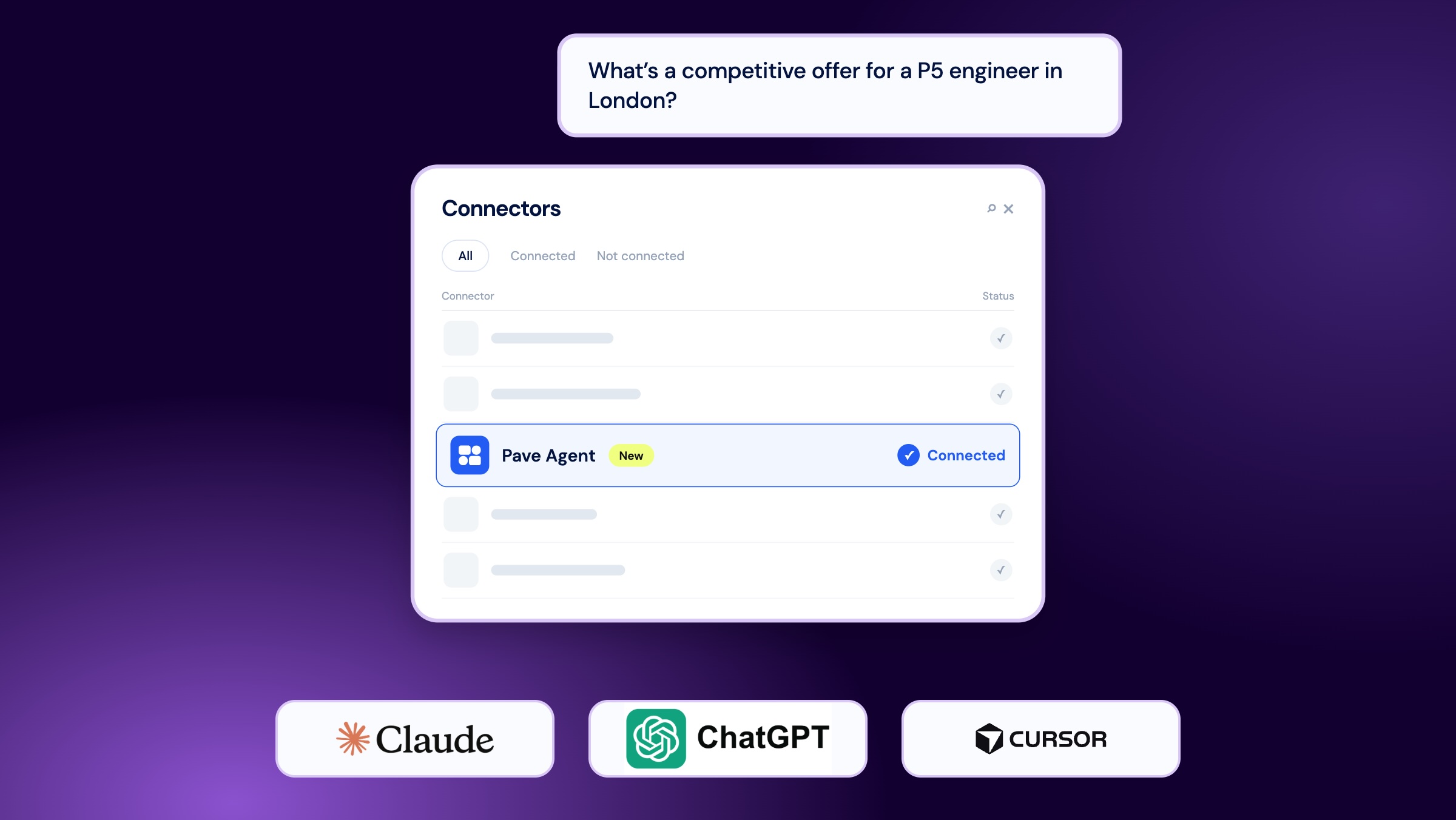
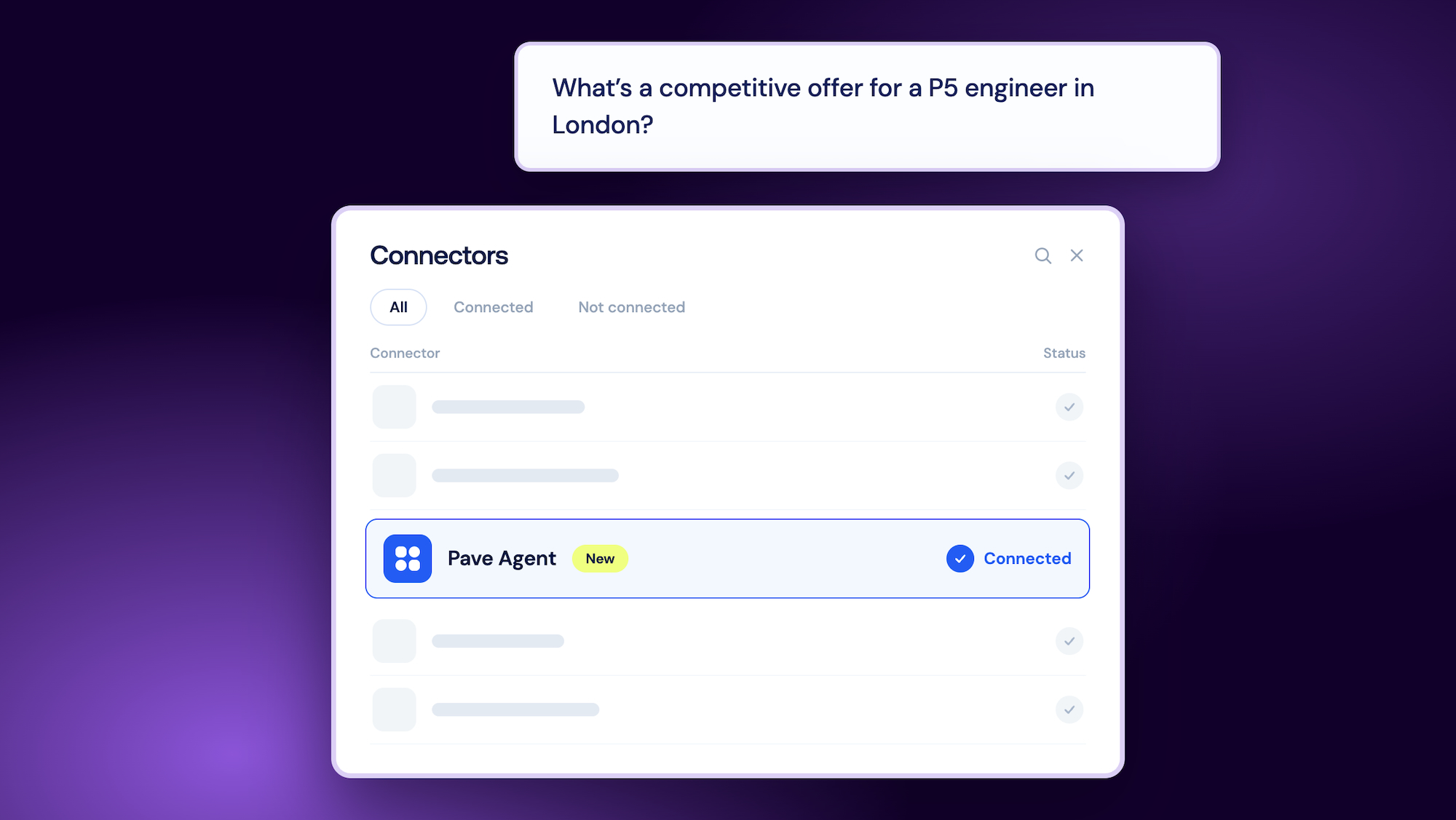
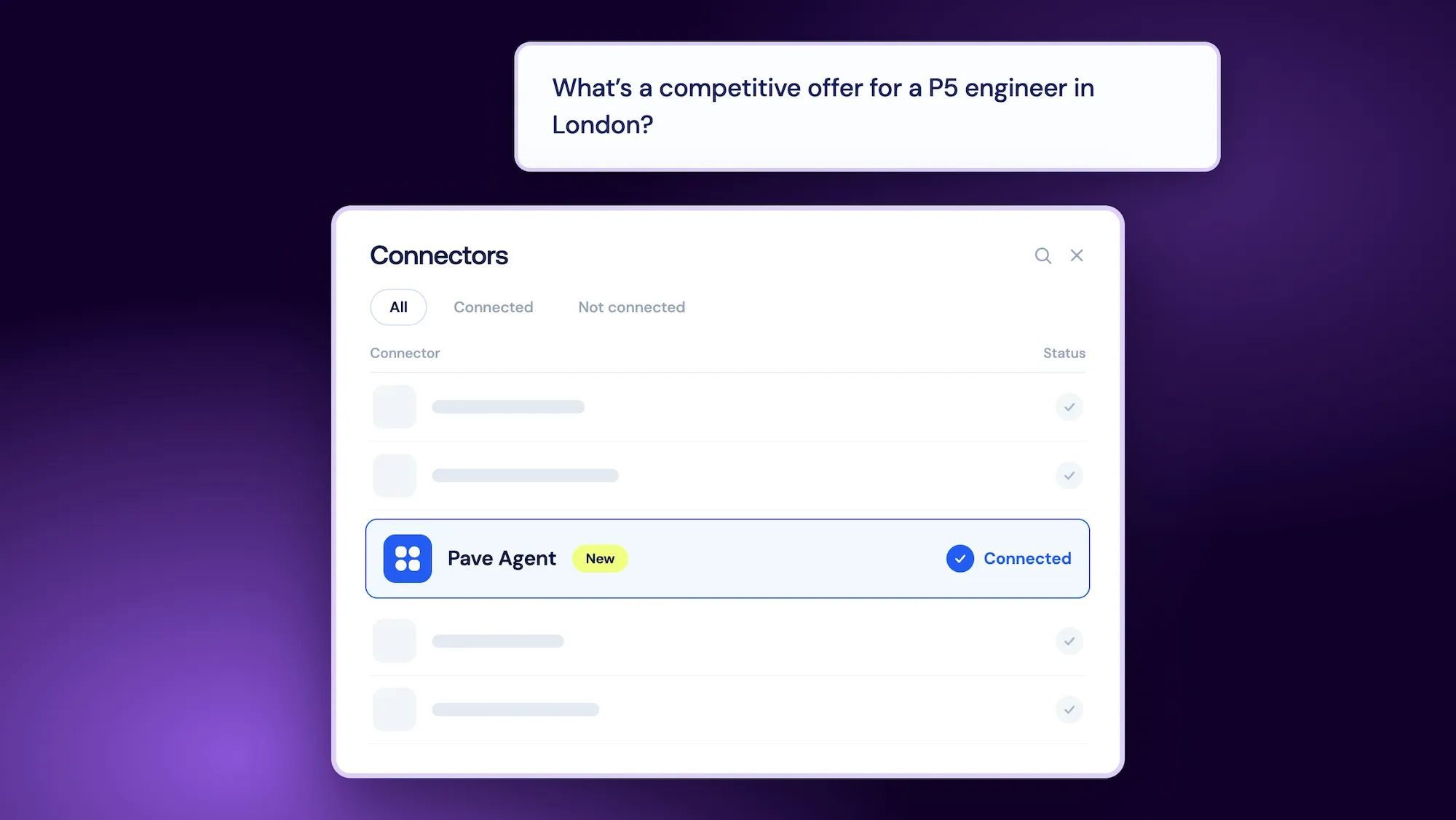
Even teams that build need a foundation they can’t build themselves: market data. No in-house agent can generate real-time benchmarks from scratch, so builders still need a trusted source to ground their tools. Pave’s MCP connection brings the Pave Agent’s sourced, explainable compensation analysis into the AI tools your team already builds with, including Claude, Cursor, and ChatGPT. Your workflows draw on Pave’s data and compensation judgment instead of recreating it. Build the layer that’s yours, and plug into the one that isn’t.
Buy AI tools
Buy comes in two forms, and they’re easy to confuse. The first is generic AI: an enterprise license for a general-purpose assistant. It shows up as a line item, so it can feel like you’ve bought your compensation AI. For standard tasks like drafting compensation communications, it’s sufficient. But it doesn’t know your pay targets, how you balance tenure and performance, or where a role sits in the market, so its answers are plausible but not defensible. You’ve paid for AI without getting the benefits of compensation AI.
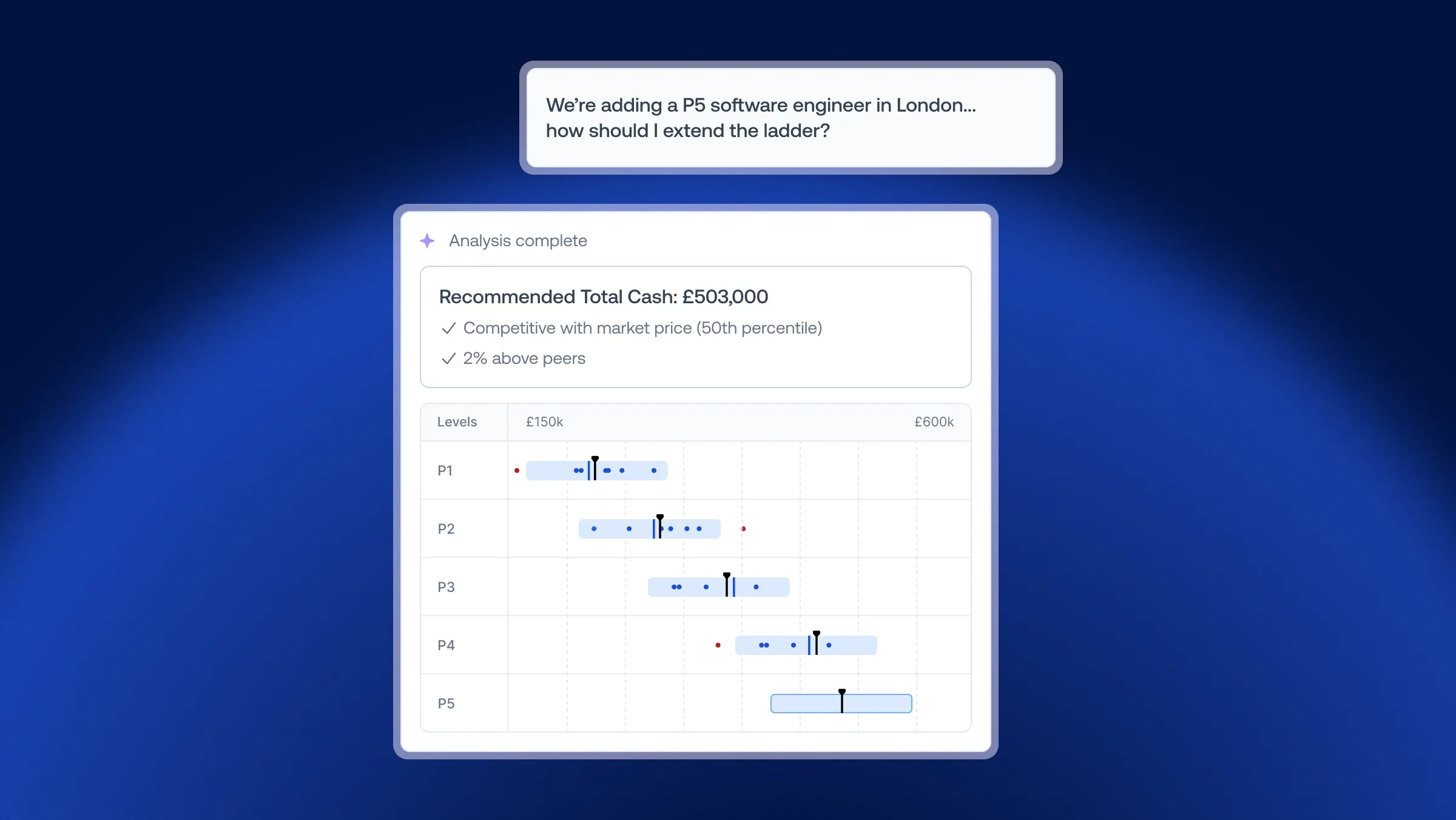
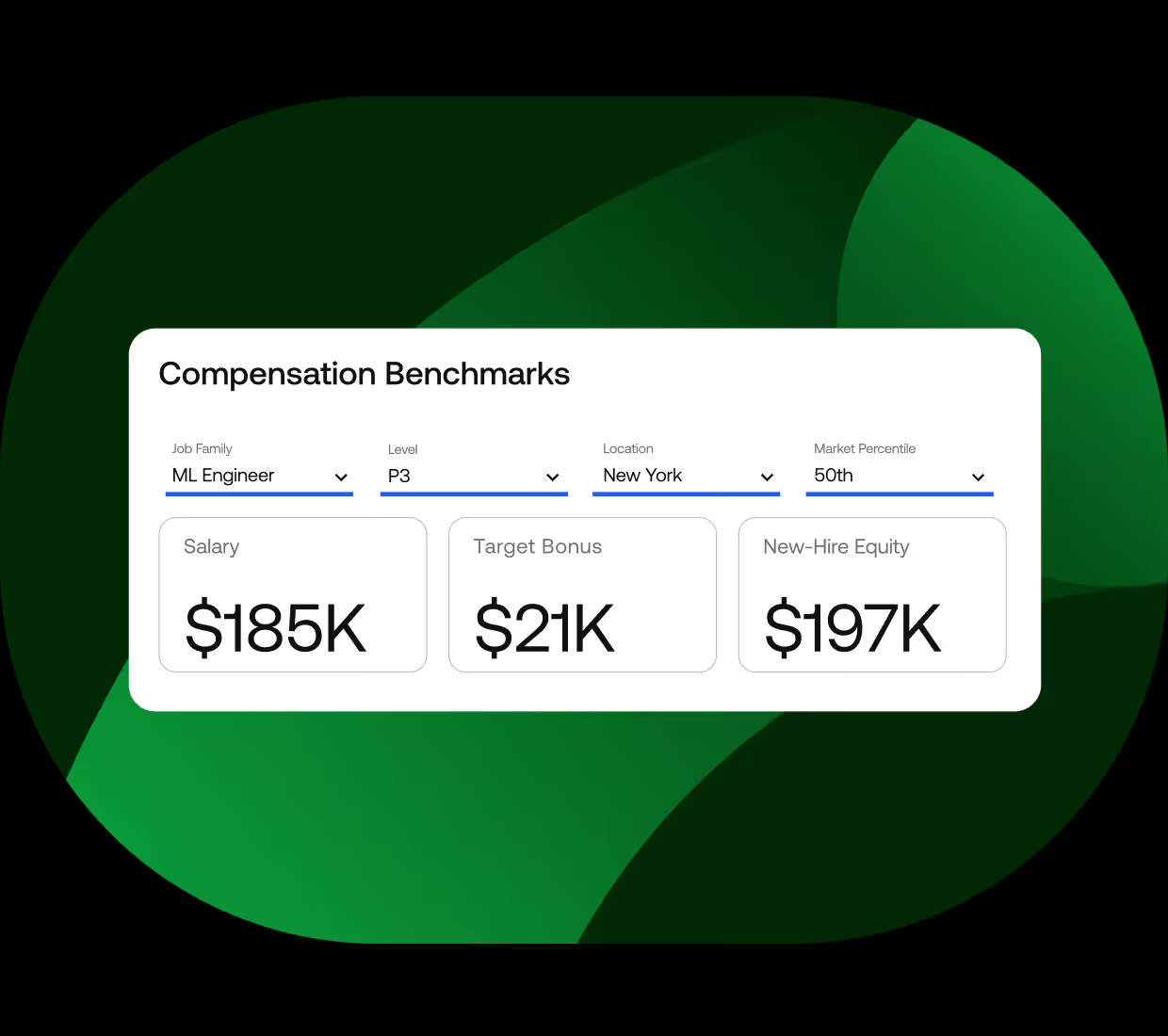
The second is buying purpose-built compensation AI, and it’s the most straightforward call on the spectrum. Pave Agent, your AI compensation analyst, arrives with leveling, internal equity, and market positioning built in, grounded in real-time data from over 9,000 companies. It provides recommendations, and your team retains decision-making authority. Pave’s Compensation Engineers work alongside your team to get it running against your data and programs from day one.
Blend the two approaches
Blend means tailoring vendor capabilities to your organization’s context. With Pave, you code your policies once, then Pave Agent applies them, routes exceptions to your compensation team, and leaves final approval with you. You can layer your own skills on top.
With MCP and agent-to-agent communication, your compensation system of record doesn’t need to do everything itself. It holds the compensation expertise and data while working alongside other teams’ agents, such as Communications for rollout drafts or Performance for merit inputs. As your program evolves, Pave’s Compensation Engineers help you extend the Agent to fit new policies and workflows.
Ownership and responsibility by approach
The critical role of AI governance
One principle applies to all three approaches: compensation AI should recommend, not decide. An agent stating “I recommend adjusting this salary to $X based on the following data” is appropriate. An agent stating “I’ve adjusted this salary” exceeds its role. The EU AI Act classifies AI used in employment decisions as high-risk. A 2026 amendment delayed these obligations to December 2027, but did not repeal them.
The standard is straightforward: can you defend the output to your board, legal team, and employees? If the system cannot cite its sources, display confidence levels, and highlight caveats, it is not defensible (see our 7 Factors to Evaluate AI Agents for a checklist). Nearly 60% of compensation leaders are skeptical about fully automating pay decisions. Our research also indicates that organizations strong in both governance and implementation achieve a 50% business impact rate, nine times higher than those lacking both.
Five questions to ask before you build
- Who owns the tool or process after the next cycle? Name the person, and ask what happens when they leave.
- Where does the market data come from, and how current is it?
- Can it show its work, with sources, confidence levels, and caveats?
- Who signs off on pay equity and transparency compliance?
- Is this where you actually differentiate? Your pay philosophy probably is. A benchmarking engine probably isn’t.
If you cannot confidently answer all five questions, consider adopting a proven engine and focusing your efforts on the differentiating layer above it.
Lead with your philosophy, power it with proven tools
Build custom solutions only where you have a clear case for differentiation and the resources to maintain them. For core workflows, leverage established compensation expertise and tailor it to your needs. In all cases, ensure human oversight of decisions and proactively define your function’s strategic role before generic tools do so by default. Whichever path you choose, Pave can be the compensation foundation underneath it.
See how the Pave Agent works →
More articles








































































See what Pave can do with your comp data.
Real-time market data, an end-to-end comp platform and the Pave Agent, on your own numbers.
Book a demo