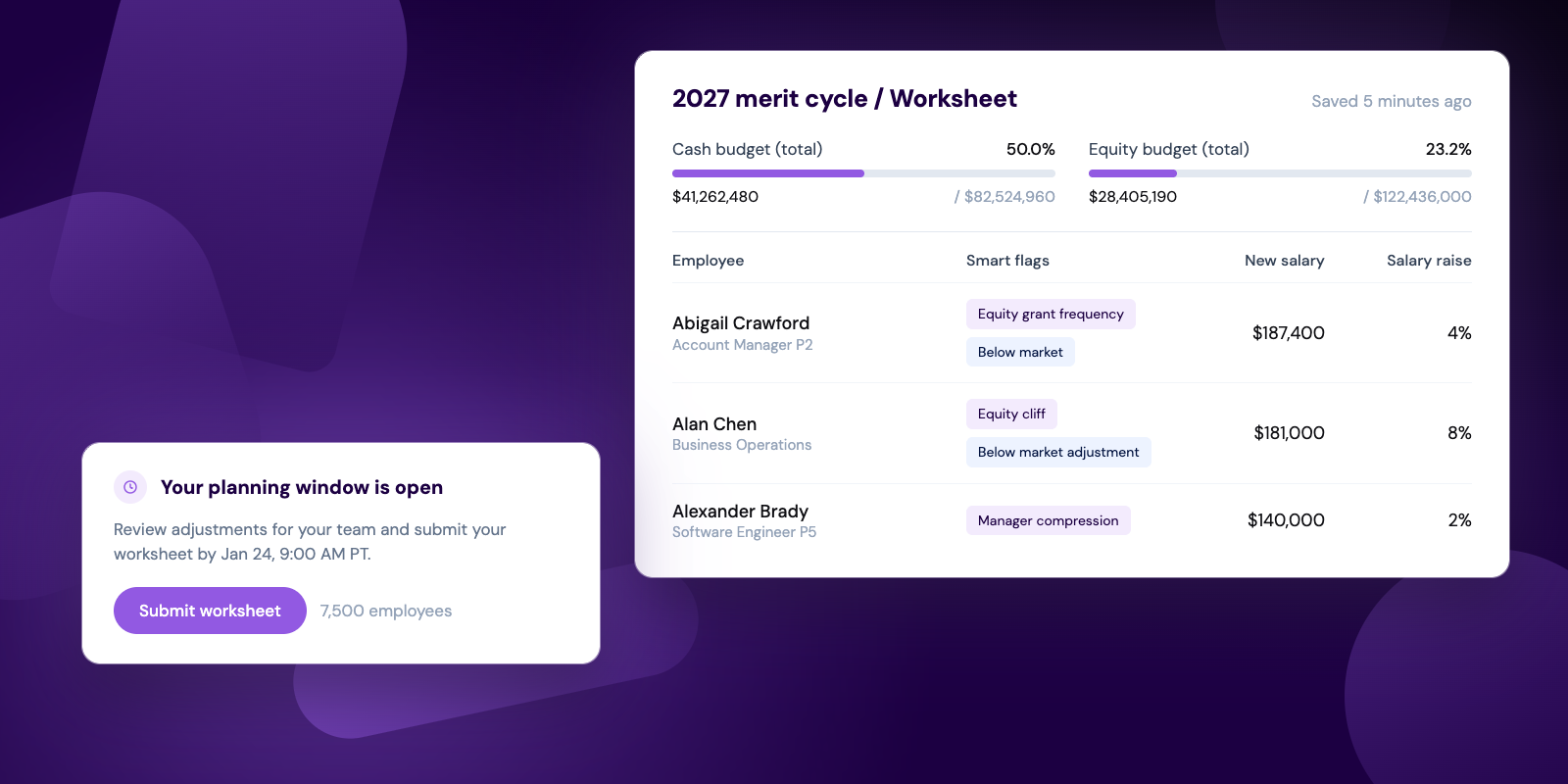
Compensation Planning is the merit cycle engine of Pave, the AI compensation platform. It manages merit, bonus, and equity decisions in a single guided cycle, providing budget controls, real-time analytics, and flexible customization. Managers and leaders retain ownership of each pay decision.
Below are direct answers to common questions compensation teams have when evaluating how a cycle operates in Pave.
Does Pave support budget holdbacks in Compensation Planning?
Yes. Compensation Planning supports both cash and equity holdbacks on top-down budgets. When a holdback is configured, the total allocation for a business unit equals the base budget plus the holdback amount (Total Allocation = Budget + Holdback). This allows leaders to reserve funds for late-cycle adjustments, retention cases, or executive discretion without affecting the budget managers use for planning.
How do holdbacks interact with budget limits?
Holdbacks work with Pave's budget controls, which enforce strict limits and can automatically block submissions that exceed them. Managers plan within their allocated budgets, while leaders release and apply the reserved holdback as needed. This approach ensures budget compliance with a built-in reserve, preventing unexpected overages after the cycle closes.
Can a single Pave cycle handle multiple currencies?
Yes. A single Compensation Planning cycle supports an exchange-rate table for all employee currencies. Administrators set the rates once per cycle, and planners can view amounts in either each employee's local currency or the company's base currency.
Do global companies need a separate cycle per country?
No. With the exchange-rate table and currency toggle in a single cycle, companies operating in multiple countries can run one merit cycle with a unified budget and guidelines. Local managers view figures in their own currency, while finance sees consolidated data in the base currency. This eliminates the need to split cycles by region.
Are base, bonus, and equity planned together or in separate cycles?
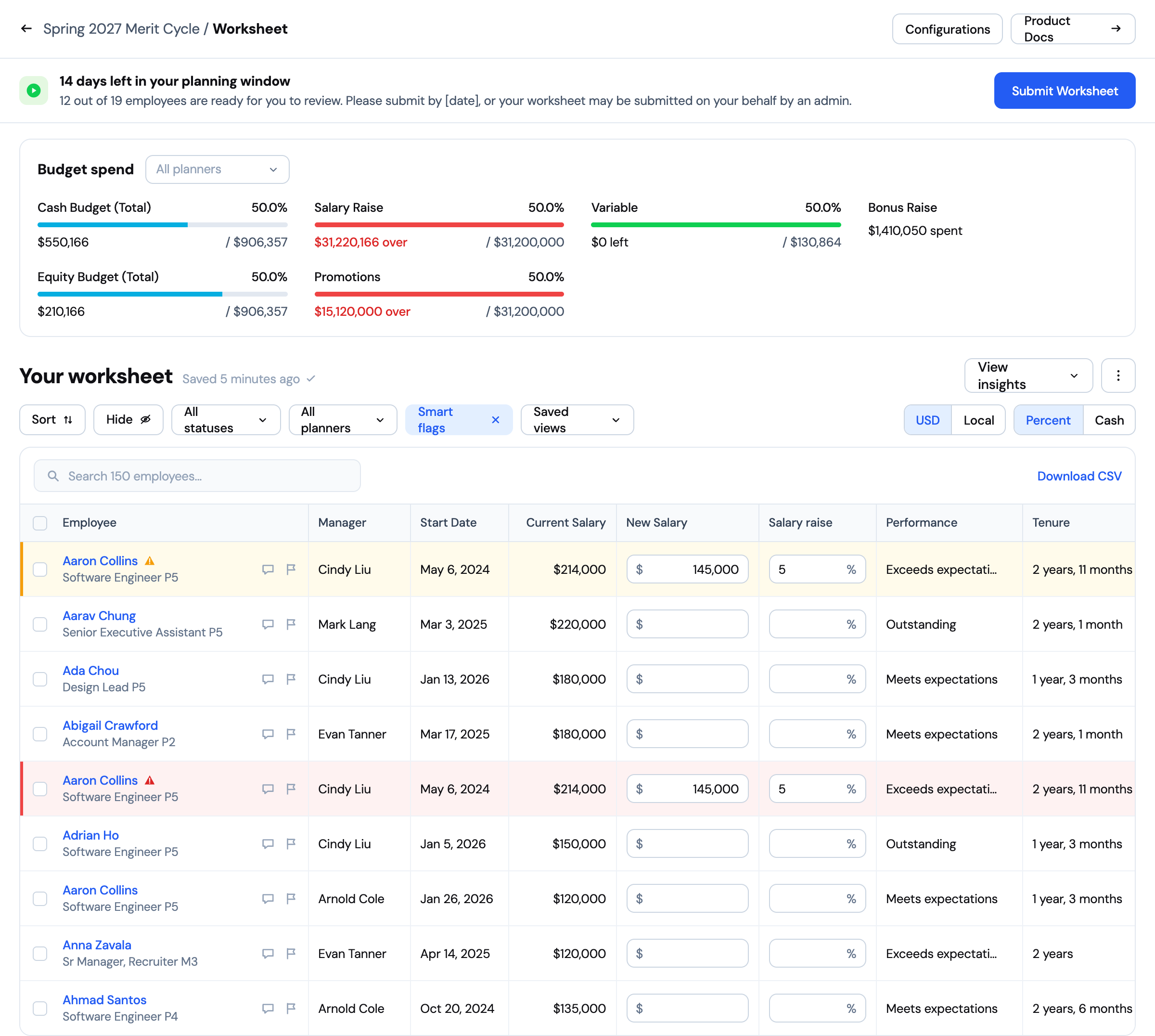
Together. Base salary, bonus, and equity are managed as columns in the same worksheet within a single cycle. Each component is included in computed totals, such as New Total Annual Compensation, allowing managers to assess the complete pay package for each employee rather than making separate decisions in different tools.
Why does unified planning matter?
When merit, bonus, and equity are visible together, managers can compare different compensation strategies, such as a modest base increase with a significant equity grant versus a larger cash-only adjustment. Compensation teams present a unified budget to the CFO and board, ensuring each decision aligns with the company's total rewards philosophy.
Can hourly and salaried employees be planned in the same cycle?
Yes. Hourly and salaried employees can be included in the same cycle and worksheet. Pave automatically converts hourly values for each employee, so managers see compensation in the appropriate format, and annualized totals are consistent across pay types. As a result, organizations in retail, manufacturing, healthcare, and hospitality with large hourly populations do not need separate processes or cycles for hourly workers.
Can a plan be edited after a manager submits it?
Yes. Submitting a plan does not lock it. Compensation Planning includes Worksheet Returns, allowing a downstream planner or approver to return a plan for edits during the cycle, with context on required changes. Plans are locked only when the administrator finalizes the cycle.
How is this different from an admin overriding the number?
Worksheet Returns sends revisions back through the approval chain, ensuring the manager responsible makes the changes. Each round is logged, and no one edits over another planner's work. This maintains ownership and creates a clear record of who made each compensation decision.
Is Compensation Planning built on fixed templates or a formula engine?
Pave uses a formula and rules engine rather than fixed templates. Two key capabilities demonstrate this:
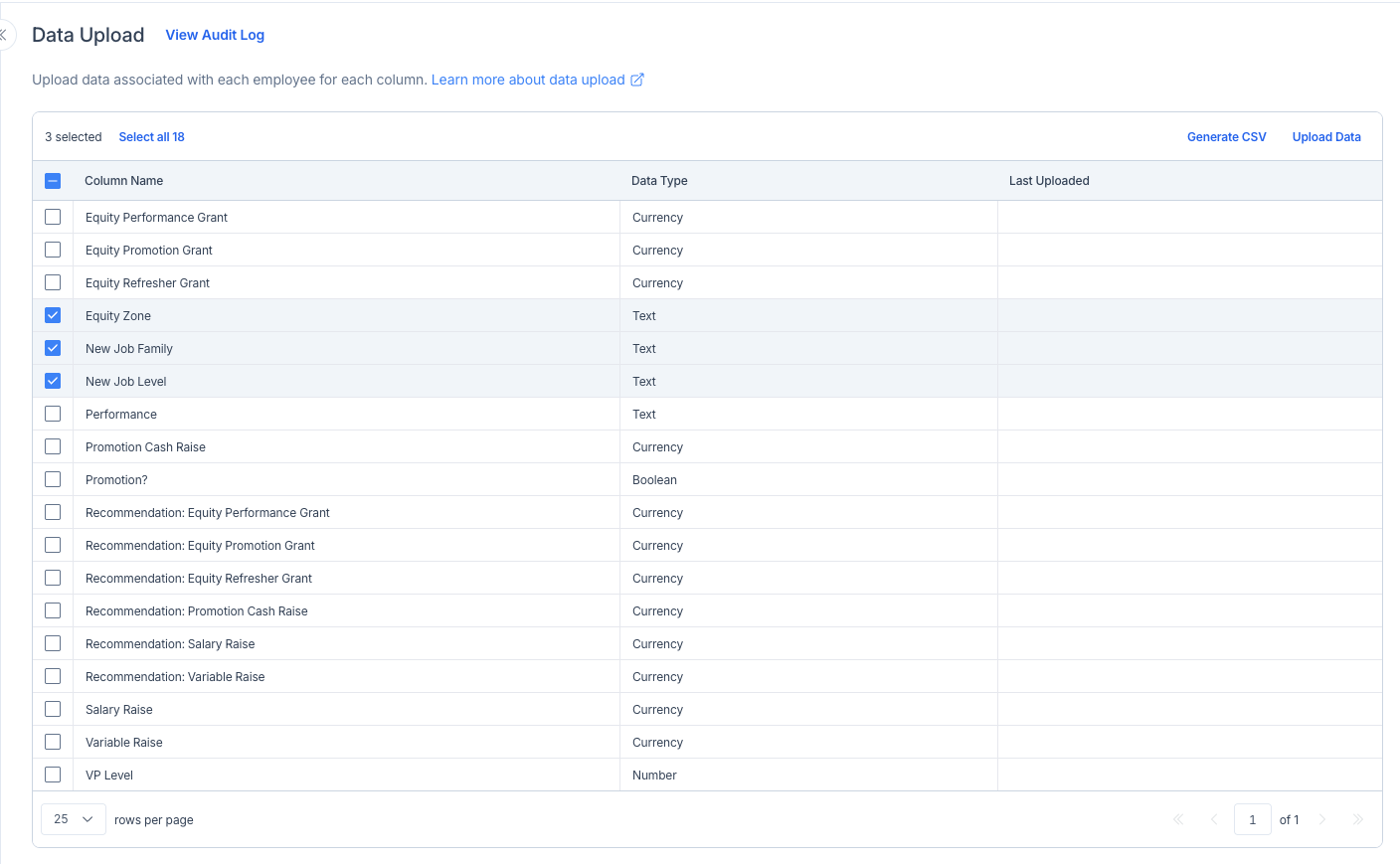
- Custom columns can reference any data type or source, including HRIS fields, performance ratings, market data, or other cycle columns, and support Handlebars formula logic. Compensation teams can build calculations such as prorated eligibility, compa-ratio guideline ranges, or blended performance scores directly in the product, with live previews and no need for engineering support.
- Smart Flags support custom rule logic. In addition to built-in flags for compensation outliers, manager compression, priority sort, and vesting cliff risk, teams can define their own conditions to highlight situations relevant to their compensation philosophy, such as increases above range maximum or top performers receiving below-guideline merit.
Does this mean Pave imposes its own methodology?
No. The system implements your methodology, including your pay philosophy, guidelines, and budget constraints. Pave provides managers with context and highlights risks, while budget limits prevent overruns. Managers make decisions within these parameters, ensuring guidance without rigidity.
Who creates reward letter templates in Pave?
Template authoring is self-serve through an in-app editor. Compensation teams can create and edit reward letter templates directly in Pave, incorporating cycle data so each employee's letter reflects their final merit, bonus, and equity outcomes. This streamlines the process from cycle decision to employee communication within a single workflow, eliminating the need for external services to update templates.
More Frequently Asked Questions about Pave Compensation Planning
Does Pave support cash and equity holdbacks?
Yes. Pave supports both cash and equity holdbacks on top-down budgets, with Total Allocation calculated as Budget + Holdback. Holdbacks aren't available on bottom-up budgets.
Can I run one merit cycle across multiple currencies in Pave?
Yes. A single cycle supports an exchange-rate table across all currencies, with a toggle between local and base currencies. Separate cycles per country aren't required.
Can Pave plan base, bonus, and equity for both hourly and salaried employees in a single cycle?
Yes. All three components are columns in one worksheet and roll up into totals such as New Total Annual Compensation. Hourly and salaried employees can be planned together, with the hourly display automatically converting per employee.
Are compensation plans locked once a manager submits in Pave?
No. Worksheet Returns allow a downstream planner to send a plan back for edits mid-cycle. Plans lock only when the administrator finalizes the cycle.
Can I customize columns and rules in Pave Compensation Planning without engineering help?
Yes. Custom columns support any data type or source with Handlebars formula logic, and Smart Flags support arbitrary rule logic, so comp teams configure calculations and risk checks themselves.
More articles













































































See what Pave can do with your comp data.
Real-time market data, an end-to-end comp platform and the Pave Agent, on your own numbers.
Book a demo